The Fragmented Future: Europe's E-commerce Giants Wrestle With Localisation
European digital retail leaders are navigating a complex landscape, where pan-continental ambition often collides with deeply ingrained national consumer preferences and regulatory divergence. Success hinges on a nuanced strategy beyond mere scale.

From its Warsaw headquarters, Allegro, Poland's dominant online marketplace, continues to eye expansion beyond its home turf, recently acquiring the Czech Mall Group. This move underscores a persistent challenge for European e-commerce: translating domestic success into cross-border triumph across a continent of diverse languages, logistics, and purchasing habits. While companies like Zalando have forged a strong multi-market identity in fashion, the broader digital retail sector remains significantly more fragmented than its American or Asian counterparts, a condition that profoundly shapes investment and innovation.
The notion of a singular 'European consumer' often dissolves upon closer inspection. A French shopper on Cdiscount exhibits different priorities than a German one browsing Otto or a Spanish customer navigating El Corte Inglés online. These differences extend beyond language to payment methods, delivery expectations, and even product assortments. For instance, instant grocery services like Flink, which inherited some of Gorillas' legacy, have found varying degrees of traction across cities, influenced by urban density, existing supermarket infrastructure, and cultural attitudes towards convenience.
The Logistical Labyrinth and Regulatory Hurdles
Logistical networks, while improving, still present a significant barrier. Shipping a package from a distribution centre in Germany to a customer in southern Italy often incurs higher costs and longer transit times than equivalent distances within a single national market. Companies must contend with a patchwork of consumer protection laws, data privacy regulations, and tax regimes across the 27 member states, adding layers of complexity that larger global players often amortise over a much broader revenue base. This regulatory friction makes true operational harmonisation a formidable task.
The absence of a truly seamless digital single market continues to impose a 'cost of Europe' on e-commerce operators, limiting their ability to achieve efficiencies of scale comparable to those enjoyed by platforms in more homogenous geographies.
This environment has fostered robust national champions. Bol.com holds sway in the Netherlands and Belgium, while Carrefour and REWE defend substantial market share in their respective geographies, particularly in grocery where local sourcing and established loyalty programmes offer significant advantages. Even the success of Vinted, the Lithuanian-born second-hand fashion platform, demonstrates the power of a specific niche and community-driven model to transcend national borders, though its operational backbone still relies on adapting to local postal services and consumer behaviours.
Consider the paradox: a consumer in Spain can effortlessly purchase goods from a Chinese retailer, yet faces higher friction and often fewer options when attempting to buy from a boutique German e-commerce site. This is not merely a preference but a systemic inefficiency. European cross-border e-commerce, excluding the UK, reached approximately €170 billion in 2022, representing a substantial volume but still overshadowed by intra-national trade. While this figure shows double-digit growth, its full potential remains untapped due to these structural impediments.
Localisation as the New Standard
The future of e-commerce in Europe appears to hinge on profound localisation rather than a simple scaling of a single model. This means not just translating websites but adapting payment gateways, customer service protocols, marketing messages, and product ranges to resonate with distinct national audiences. For retailers like Zalando, their success has come from building sophisticated local operations, often with separate teams responsible for specific markets, rather than a monolithic pan-European approach.
This intricate tapestry of national markets presents both a challenge and an opportunity. For smaller, agile players, deep understanding of a few key markets can yield significant returns. For the larger incumbents and aspirants, the imperative is to invest in robust technological infrastructure capable of handling this complexity, coupled with strategic partnerships and acquisitions that provide immediate local market expertise. The race for digital dominance in Europe is less about raw scale and more about mastering the art of distributed, nuanced market penetration.
News Legacy maintains editorial independence. Some recommendations may contain affiliate links. We earn from qualifying purchases at no additional cost to you. Read our policy.
Read Next

Is Sohna Really the Next Chhatarpur?
Three decades after Chhatarpur redrew South Delhi's map for space, privacy and exclusivity, a familiar pattern is now taking shape further south, and Sohna is where the smart money is beginning to look.
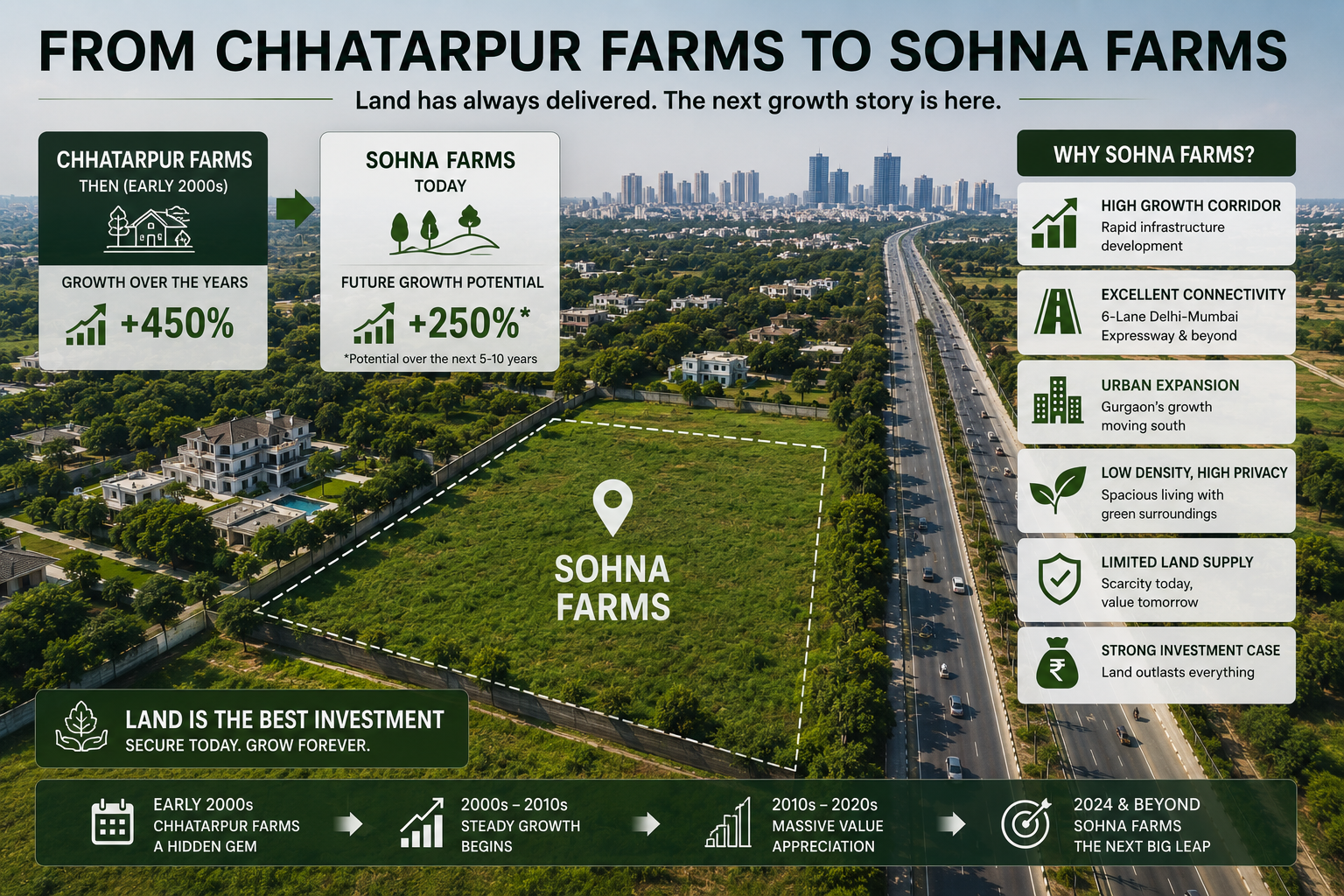
How Chhatarpur Farmhouses Created Multi-Crore Wealth for Early Buyers
What a quiet corner of South Delhi can teach investors about land, scarcity, and long-term wealth creation.

The ₹5 Crore Land Purchase That Became Worth ₹70 Crore
What the Story of DLF Chhatarpur Farms Reveals About Wealth Creation Through Premium Land Ownership
One short email. Stories you can use.
A free, occasional email from our editorial team with our latest features, explainers and reads. Unsubscribe any time — your email stays with us.