The Fragmented Future of European Commerce: A Regional Patchwork
Despite an aspiration for seamless cross-border trade, distinct consumer preferences and operational realities continue to shape a diverse e-commerce landscape across the European Union, presenting both challenges and unique opportunities.

In Berlin, a customer might browse Zalando for fashion or order groceries from Flink, while in Warsaw, the default for a broad array of goods remains Allegro. This contrast highlights a persistent reality across the European Union: consumer commerce, particularly online, remains far from a monolithic entity. Although the single market theoretically fosters seamless trade, deep-seated national habits, logistical complexities, and competitive local ecosystems continue to define purchasing behaviour and retailer strategy.
The pandemic-era surge in digital adoption initially suggested a homogenisation of European retail. Yet, as economic pressures mount and supply chains recalibrate, the nuances of each market are reasserting themselves. From the strong preference for discounters like Lidl and REWE in Germany to the enduring role of hypermarkets such as Carrefour in France and Spain, physical retail remains a powerful, often regionally tailored, force.
The Enduring Local Advantage
While global behemoths like Amazon operate widely, indigenous platforms often command significant loyalty. In the Netherlands and Belgium, Bol.com consistently outperforms many international rivals, leveraging its local understanding and robust logistics network. Similarly, France’s Cdiscount maintains a formidable presence, adapting its offering to French consumer expectations. This local embeddedness extends beyond pure e-commerce to re-commerce; Vinted, originating in Lithuania, has successfully scaled its second-hand fashion platform across multiple European countries by understanding local market dynamics rather than imposing a one-size-fits-all model.
The swift grocery delivery sector, often highlighted by the rapid rise and subsequent retrenchment of players like Gorillas and Flink, vividly illustrates this fragmentation. While initial capital flowed freely, sustainable models proved elusive without a deep appreciation for varying urban densities, labour laws, and consumer willingness to pay premium delivery fees across Paris, Berlin, or Madrid. The intense competition and high burn rates underscored the difficulty of scaling a uniform service across such varied operational landscapes.
The notion of a singular 'European consumer' remains largely theoretical. Purchasing decisions are still fundamentally shaped by national culture, disposable income, and established retail infrastructure.
Cross-border commerce, while growing, still faces significant friction points. Regulatory differences, varying VAT rates, payment preferences (e.g., invoice payments in Germany versus card payments elsewhere), and language barriers can deter both consumers and retailers. For a Polish consumer to purchase from a French merchant, or vice-versa, the operational hurdles are often greater than within their national borders, despite the EU's foundational principles.
Strategic Divergence for Retailers
Established retailers are navigating this landscape with tailored strategies. Carrefour, for instance, operates distinctly different store formats and product assortments across its primary markets of France, Spain, and Italy, reflecting local tastes and purchasing power. Even discounters like Lidl, known for their streamlined model, adapt promotional strategies and product mixes to resonate with regional demographics. This adaptability underscores a recognition that deep market penetration requires more than simply replicating a successful model.
For online pure-plays, the path to pan-European success often involves significant localization efforts. Zalando, for example, offers localised content, payment options, and delivery services across its various European markets, understanding that a uniform approach would alienate significant portions of its potential customer base. The investment in these granular details is substantial but deemed necessary to compete effectively against entrenched local players.
The trajectory for European commerce points towards continued divergence rather than convergence. While some digital standards and logistical improvements may gradually reduce friction, the core elements of consumer preference and competitive local ecosystems are likely to ensure a distinctive, regionally nuanced retail environment for the foreseeable future. Businesses aspiring to broad European reach must embrace this complexity, approaching each market not as a stepping stone in a unified progression, but as a unique entity requiring bespoke attention and strategic investment.
News Legacy maintains editorial independence. Some recommendations may contain affiliate links. We earn from qualifying purchases at no additional cost to you. Read our policy.
Read Next

Is Sohna Really the Next Chhatarpur?
Three decades after Chhatarpur redrew South Delhi's map for space, privacy and exclusivity, a familiar pattern is now taking shape further south, and Sohna is where the smart money is beginning to look.
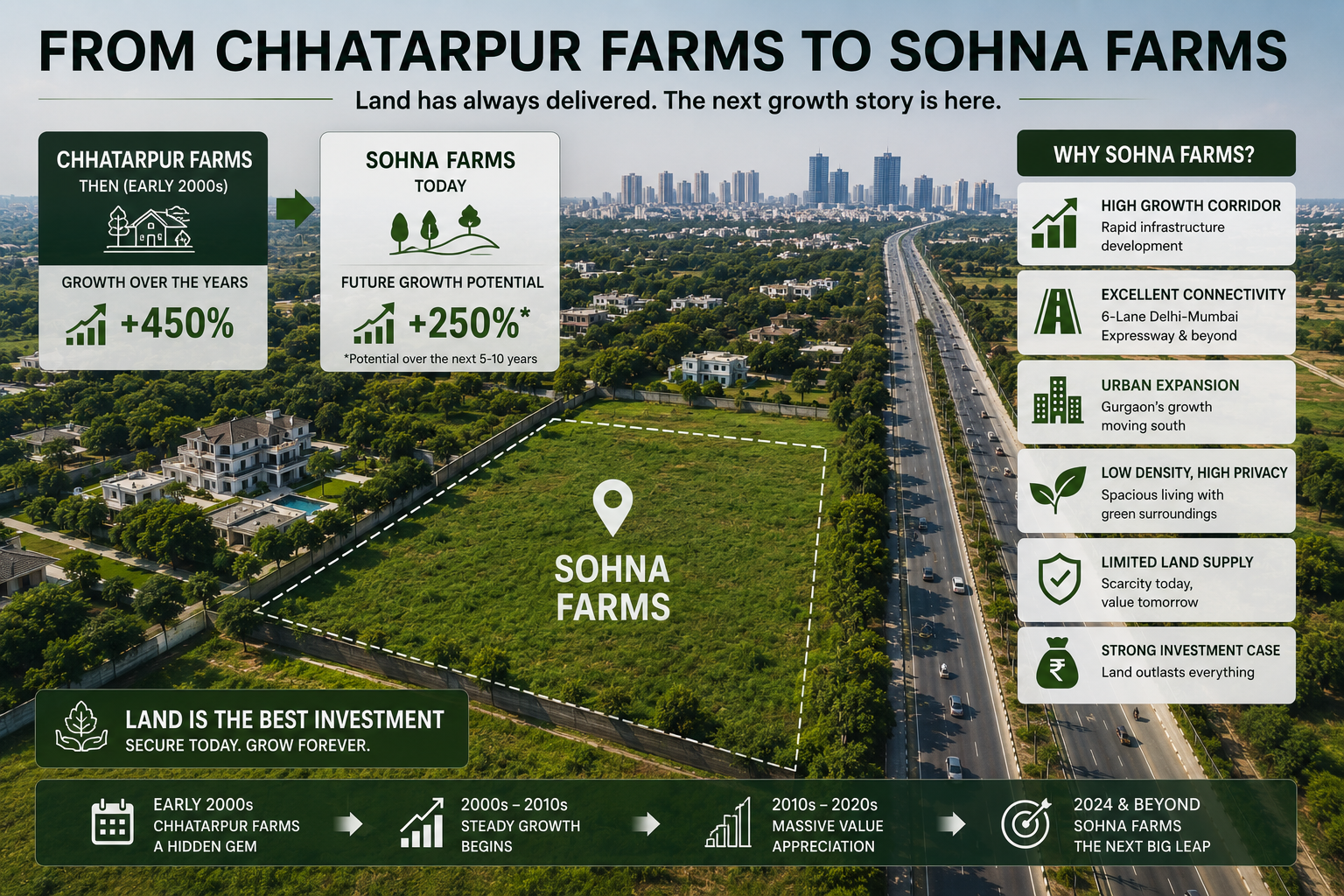
How Chhatarpur Farmhouses Created Multi-Crore Wealth for Early Buyers
What a quiet corner of South Delhi can teach investors about land, scarcity, and long-term wealth creation.
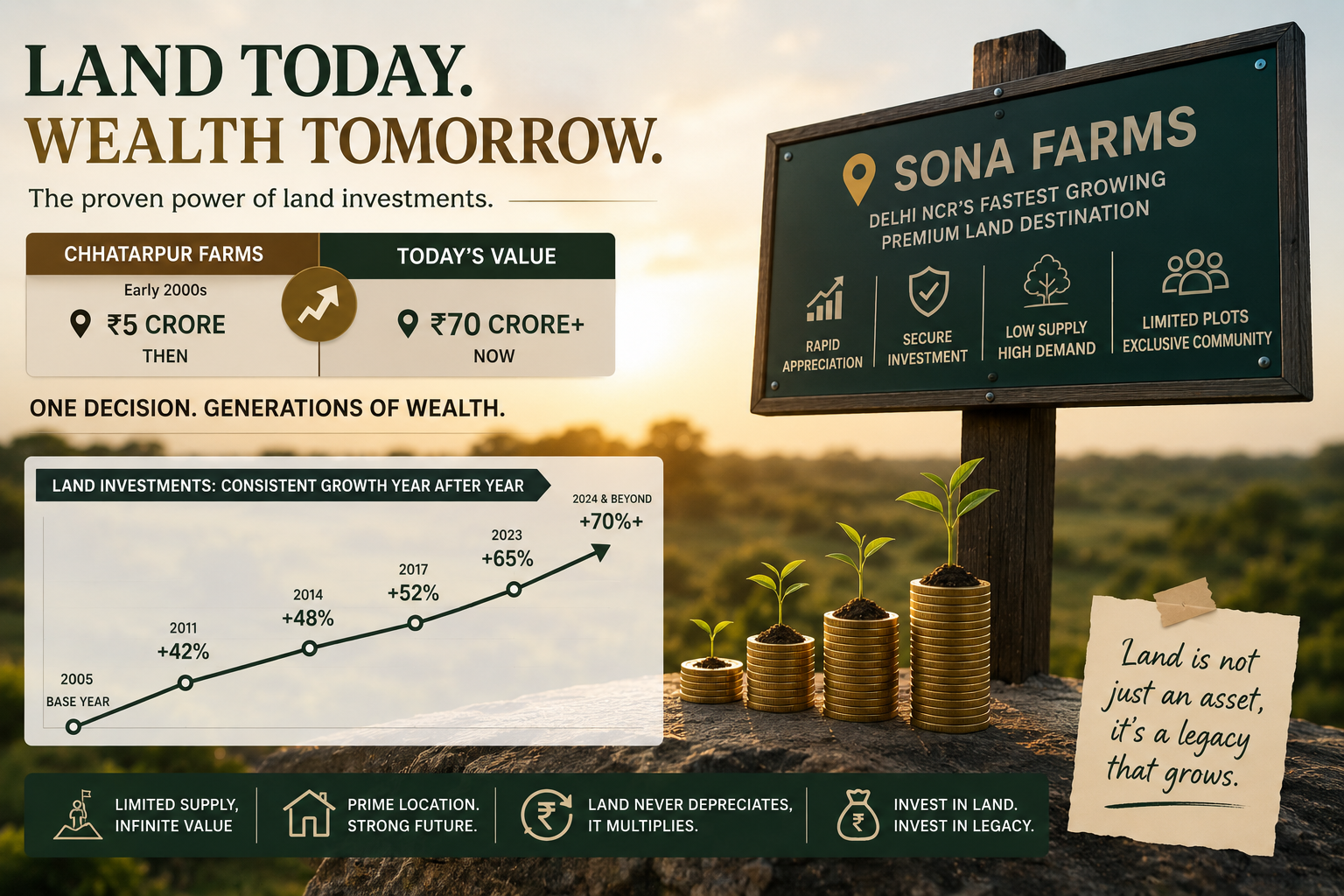
The ₹5 Crore Land Purchase That Became Worth ₹70 Crore
What the Story of DLF Chhatarpur Farms Reveals About Wealth Creation Through Premium Land Ownership
One short email. Stories you can use.
A free, occasional email from our editorial team with our latest features, explainers and reads. Unsubscribe any time — your email stays with us.