The Friday Night Retreat: How Supermarket Dining Bundles Outflanked the British Takeaway
As household budgets absorb elevated service fees and hospitality markups, curated grocer meal deals have transformed from a mid-week compromise into a permanent fixture of British domestic leisure.

At quarter past six on a Friday evening inside a Marks & Spencer food hall in central Leeds, the chilled aisles surrounding the gastropub provisions are congested while nearby high-street dining rooms remain half-empty. The scene is repeated in suburban Sainsbury’s superstores and urban Tesco metros across the country. Britain’s traditional ritual of the end-of-week restaurant takeaway is yielding significant ground to the premium supermarket meal bundle, signalling a structural relocation of discretionary leisure expenditure back to grocery cash registers.
The shift is anchored in an unsparing piece of household arithmetic. A casual takeaway order for two adults routed through Deliveroo or Just Eat—encompassing mains, delivery surcharges, and service percentages—now routinely clears £35, and frequently £45 in London and the South East. Conversely, elevated multi-course bundles offered by traditional grocers, typically priced between £12 and £15 with a bottle of wine included, present an arbitrage that middle-income families find difficult to ignore. What was once accepted as a frictionless weekend indulgence has begun to register as an unjustifiable luxury.
The Erosion of the Delivery Premium
The squeeze has compelled food-delivery aggregators to adjust their operational postures. Deliveroo and Just Eat have intensified their commercial partnerships with supermarket chains including Sainsbury's, Morrisons, and the Co-op, hedging against sluggish restaurant order volumes by ferrying packaged groceries to suburban doorsteps. Yet this strategy exposes a cannibalising tension within the aggregator business model: couriers are increasingly dispatched to transport pre-chilled grocer meals rather than hot kitchen dishes, yielding smaller average commissions per drop.
Consumer behaviour has evolved in tandem with these financial pressures. British shoppers are not necessarily economising on ingredient quality; instead, they are upgrading their purchases within retail channels while abandoning full-service dining rooms. Premium own-label sub-brands—such as Tesco Finest, Sainsbury’s Taste the Difference, and Asda’s Exceptional tier—have recorded steady volume growth, supported by consumers who redirect funds that would previously have supported a local curry house into prime rib-eye cuts and chilled sourdough garlic bread.
Private-Label Prestige and Margin Defence
Discretionary spending has not vanished from the Friday routine; it has simply relocated from commercial dining rooms into the domestic kitchen.
For the major grocers, the ascendancy of the premium meal kit represents an effective defensive bulwark against discounters Aldi and Lidl. While the German deep-discounters dominate primary dry-goods staples, they have struggled to replicate the high-spec chilled supply chains mastered by Marks & Spencer and Ocado. High-margin prepared meals act as footfall anchors, insulating full-range grocers against broader volume attrition and lifting the average spend of weekly shopping baskets.
The long-term casualties of this migration are mid-market casual dining chains, which face escalating labour overheads and commercial property rates alongside wholesale food inflation. Unless restaurant operators can offer an experience sufficiently distinct to justify a threefold markup over high-grade chilled supermarket provisions, the British dining room will remain the default venue for the nation's weekend leisure spending.
News Legacy maintains editorial independence. Some recommendations may contain affiliate links. We earn from qualifying purchases at no additional cost to you. Read our policy.
Read Next

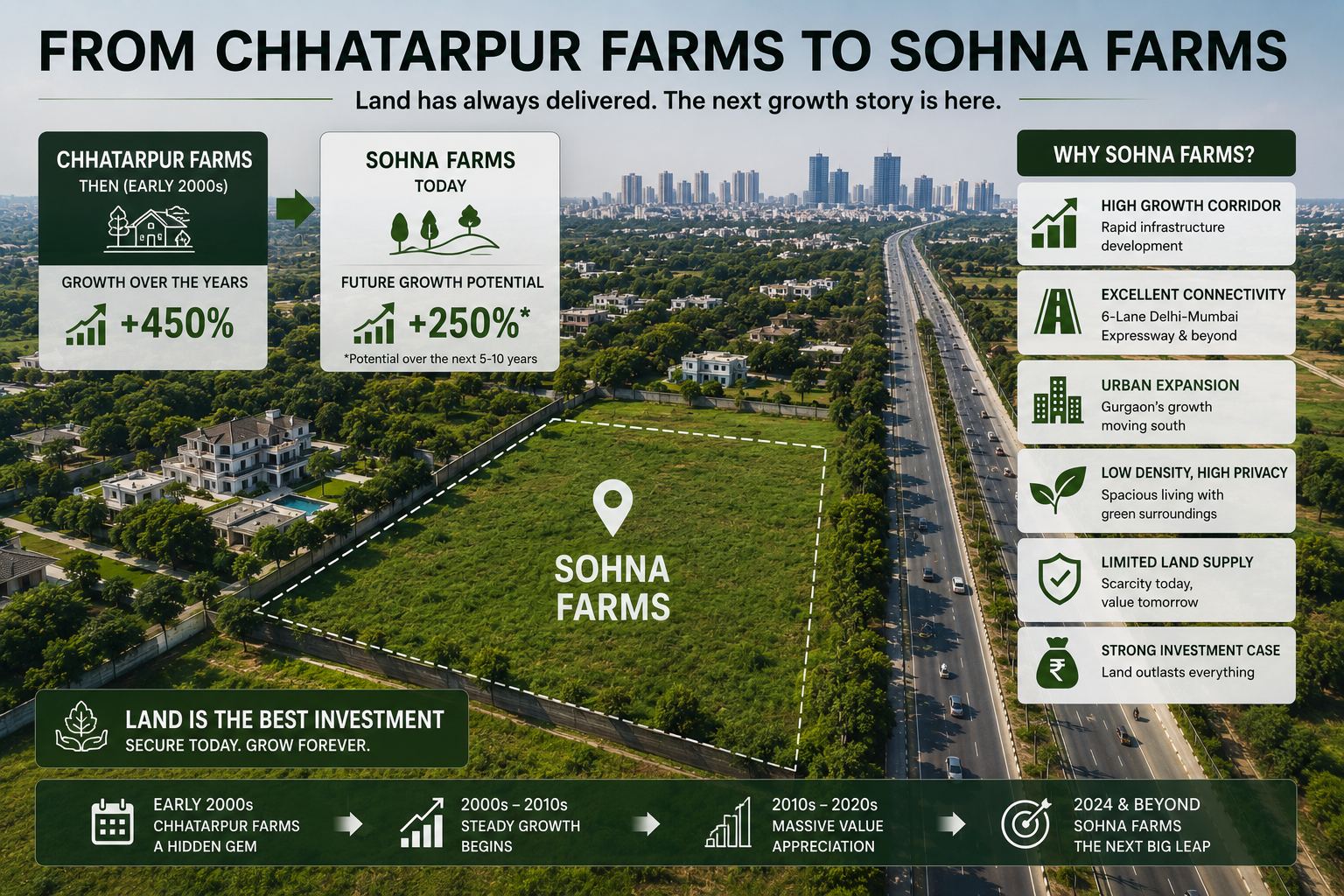
Is Sohna Really the Next Chhatarpur?
Three decades after Chhatarpur redrew South Delhi's map for space, privacy and exclusivity, a familiar pattern is now taking shape further south, and Sohna is where the smart money is beginning to look.
How Chhatarpur Farmhouses Created Multi-Crore Wealth for Early Buyers
What a quiet corner of South Delhi can teach investors about land, scarcity, and long-term wealth creation.

The ₹5 Crore Land Purchase That Became Worth ₹70 Crore
What the Story of DLF Chhatarpur Farms Reveals About Wealth Creation Through Premium Land Ownership
One short email. Stories you can use.
A free, occasional email from our editorial team with our latest features, explainers and reads. Unsubscribe any time — your email stays with us.