The Precarious Pace of UK Quick Commerce Profitability
Despite robust consumer demand for rapid delivery, the financial viability of many quick commerce ventures across the UK remains a persistent challenge, prompting a strategic reassessment among retailers and logistics providers.

A recent financial disclosure from Deliveroo, highlighting its path to profitability within specific UK zones, offers a nuanced glimpse into the quick commerce sector. While the company's efforts to streamline operations and enhance order density are yielding some positive results, the broader landscape for rapid grocery and convenience item delivery across the United Kingdom continues to present significant operational and economic hurdles for many participants. The fundamental question for this segment is not merely about market share, but about achieving sustainable unit economics amidst high labour costs and intense competition.
The initial land-grab phase, characterised by aggressive expansion and substantial venture capital inflows, has largely concluded. Companies like Getir and Gorillas, once ubiquitous across London and other major cities, have either retrenched significantly or exited the UK market altogether. Their ambitious models, often reliant on dark stores and employed riders, struggled to reconcile rapid delivery times with the inherent costs of operating in densely populated, expensive urban environments.
This shift has left a vacuum that established grocery retailers and traditional delivery platforms are now attempting to fill, albeit with more cautious strategies. Tesco, for instance, continues to expand its Whoosh service, leveraging its existing store network for fulfilment. Sainsbury's likewise utilises its supermarket footprint for rapid deliveries, often in partnership with third-party logistics firms such as Deliveroo and Uber Eats. This asset-light approach, for the pure-play delivery platforms, mitigates some of the capital expenditure associated with dedicated dark stores and inventory management.
The Last-Mile Conundrum
The core challenge remains the 'last mile'. Delivering a small basket of goods to a customer's door within 30 minutes incurs a disproportionately high cost relative to the order value. Fuel, rider wages, vehicle maintenance, and the operational overhead of swift dispatch systems collectively erode margins. Consumer willingness to pay for this convenience also has its limits; anecdotal evidence suggests a price sensitivity that often outweighs the desire for immediate gratification, especially for routine purchases.
Retailers like Marks & Spencer and Ocado, while not direct quick commerce players in the same vein as those offering 20-minute deliveries, face similar pressures in optimising their online fulfilment and delivery networks. Their focus tends to be on scheduled, larger basket deliveries, which, while offering better economies of scale, still demand substantial investment in logistics infrastructure, from automated warehouses to efficient route planning software.
The market has seen a strategic pivot: rather than promising impossibly fast delivery of any item, many players are now refining their offering to focus on specific high-margin categories or leveraging existing infrastructure more effectively. This often means working with a more constrained product selection or integrating quick delivery as an add-on service rather than a standalone, loss-leading enterprise.
The long-term viability of quick commerce hinges not on speed alone, but on a refined understanding of consumer demand at different price points and a robust operational model that can withstand persistent cost pressures.
For fashion retailers like ASOS and Next, the quick commerce model holds less direct relevance, given their typically larger average order values and less time-sensitive product categories. However, the consumer expectation of rapid gratification, increasingly set by the likes of Amazon and grocery delivery services, continues to push them towards ever-faster standard delivery options, adding pressure on their own logistics chains and warehousing operations across the UK.
The next phase for UK quick commerce will likely be characterised by consolidation, strategic partnerships, and a relentless focus on efficiency. The aspiration for universal, instant delivery of all goods appears to be giving way to a more pragmatic approach, targeting specific consumer needs and product niches where the premium for speed can genuinely offset the considerable cost of delivery.
News Legacy maintains editorial independence. Some recommendations may contain affiliate links. We earn from qualifying purchases at no additional cost to you. Read our policy.
Read Next

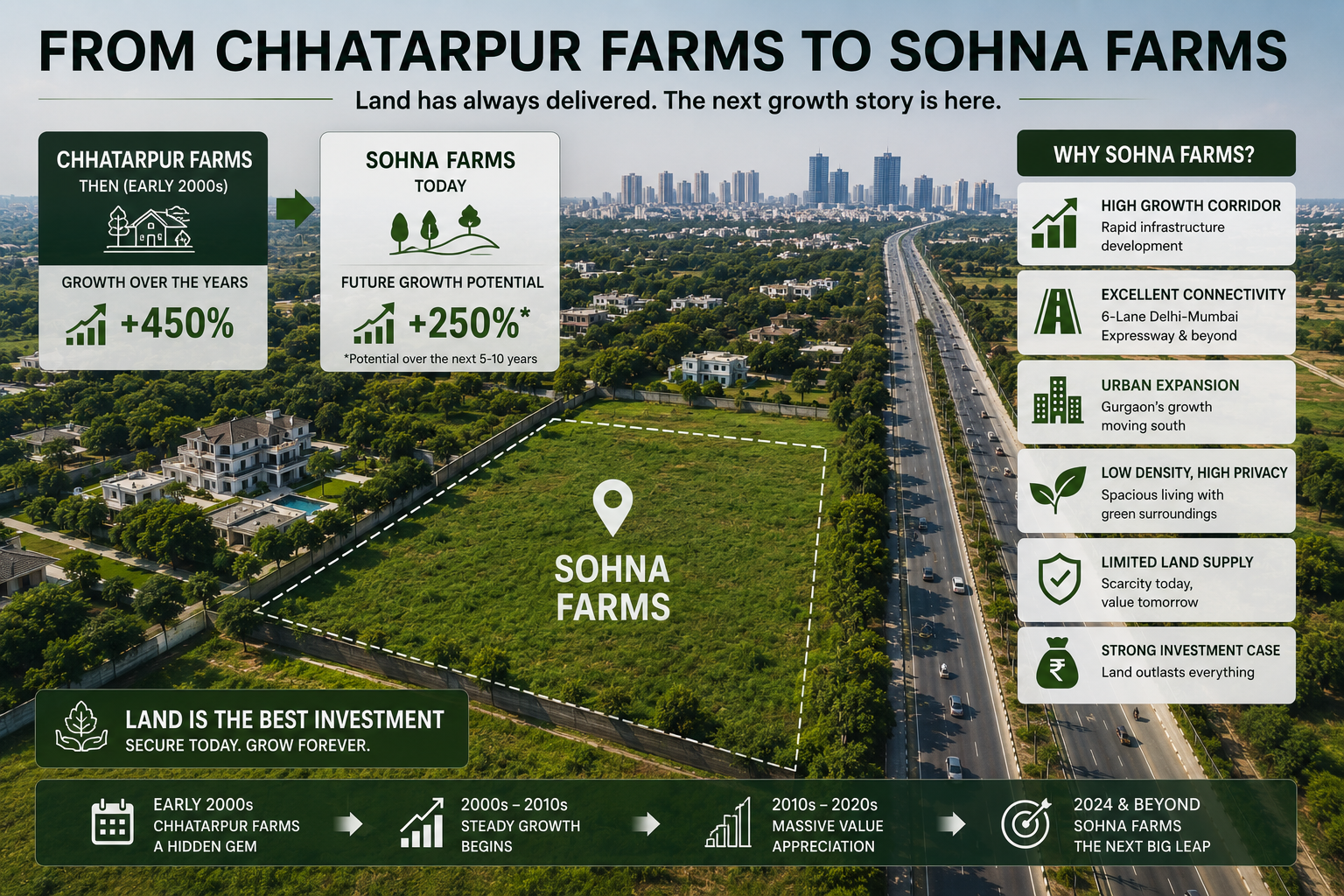
Is Sohna Really the Next Chhatarpur?
Three decades after Chhatarpur redrew South Delhi's map for space, privacy and exclusivity, a familiar pattern is now taking shape further south, and Sohna is where the smart money is beginning to look.
How Chhatarpur Farmhouses Created Multi-Crore Wealth for Early Buyers
What a quiet corner of South Delhi can teach investors about land, scarcity, and long-term wealth creation.

The ₹5 Crore Land Purchase That Became Worth ₹70 Crore
What the Story of DLF Chhatarpur Farms Reveals About Wealth Creation Through Premium Land Ownership
One short email. Stories you can use.
A free, occasional email from our editorial team with our latest features, explainers and reads. Unsubscribe any time — your email stays with us.