The Retreat to the M1 Corridor: British Retail Swaps the Rapid Hub for Regional Scale
Crushed by labour inflation and punishing urban rents, the nation's premier merchants are abandoning inner-city dark stores in favour of capital-intensive consolidation.

Along the logistics spine of Northamptonshire and the East Midlands, the queues of articulated lorries outside colossal distribution centres tell a very different story from the hyper-local delivery promises of three years ago. When capital was cheap, Britain's premier retailers were urged to scatter inventory across urban railway arches, high-street basements, and dark stores in a bid to compress delivery windows to under an hour. Today, that experiment in extreme proximity has foundered upon the harsh reality of urban lease rates, fleet insurance, and fragile operating margins. Instead, companies such as Next, Marks & Spencer, and Ocado are concentrating their capital in regional mega-hubs, accepting longer transport legs in exchange for mechanical efficiency.
The arithmetic that doomed the micro-fulfilment model unfolded swiftly across both grocery and apparel. Successive increases to the National Living Wage, which now sits above £11.44 an hour, coupled with revaluations of commercial business rates, made small-scale manual packing an indefensible overhead. Rather than constructing dedicated urban fulfilment nodes, supermarket incumbents Tesco and Sainsbury's have adopted a defensive compromise: offloading immediate convenience orders to third-party courier aggregators Deliveroo and Just Eat. By picking items directly from ambient supermarket shelves rather than maintaining separate micro-warehouses, the grocers preserve their margins while externalising the volatile cost of inner-city drivers.
Subheading: The Collapse of the Proximity Premium
British households have proven remarkably unwilling to subsidise the true expense of instantaneous drop-offs. While e-commerce volumes remain structurally higher than before the pandemic, willingness to absorb delivery fees exceeding £3 or £4 has evaporated under the pressure of prolonged cost-of-living constraints. The independent rapid-delivery outfits that once held expensive leases across inner London, Manchester, and Birmingham have either retreated or folded entirely. Ocado, while renowned for its proprietary automated grid technology, has noticeably tempered the rollout of its smaller 'Zoom' sites, choosing instead to focus throughput on its large-scale customer fulfilment centres where automated density delivers genuine cost advantages per basket.
Simultaneously, the apparel sector has spent the past eighteen months dismantling the expensive logistics perks that defined the online shopping boom. Fashion platforms such as ASOS and Boohoo, alongside high-street stalwarts, have introduced explicit return fees to combat excessive wardrobing. Reverse logistics had quietly developed into one of the most destructive drags on operating margin in British retail, with warehouse operators estimating that inspecting, steaming, and repacking a single returned garment can consume several pounds sterling in direct handling costs alone.
Subheading: Automation Replaces Urban Real Estate
The capital expenditure that once funded suburban expansion is now funneled into heavy industrial automation. Retailers are investing heavily in automated storage and retrieval systems, robotic shuttle arms, and algorithmic routing engines that reduce reliance on costly shifts of agency labour. Marks & Spencer has injected tens of millions of pounds into expanding and automating its primary distribution hub at Castle Donington, while Next has turned its automated supply network into an independent profit centre via its Total Platform operation, processing transactions and returns for third-party brands that lack the balance sheet to build their own facilities.
Warehousing strategy across Britain is no longer judged by the velocity of the courier, but by the mechanical discipline of the consolidation centre.
This retreat from city-centre hubs alters the economic geography of British commerce. While demand for secondary urban industrial units within the M25 ring road has softened from pandemic peaks, grade-A logistics space across the Midlands' 'Golden Triangle' commands enduring interest. For retail executives facing subdued domestic growth and rising statutory wage bills, the strategic mandate has pivoted decisively. Long-term commercial resilience is being secured not through the vanity of the fifteen-minute delivery, but through the patient, centralised automation of the freight corridor.
News Legacy maintains editorial independence. Some recommendations may contain affiliate links. We earn from qualifying purchases at no additional cost to you. Read our policy.
Read Next
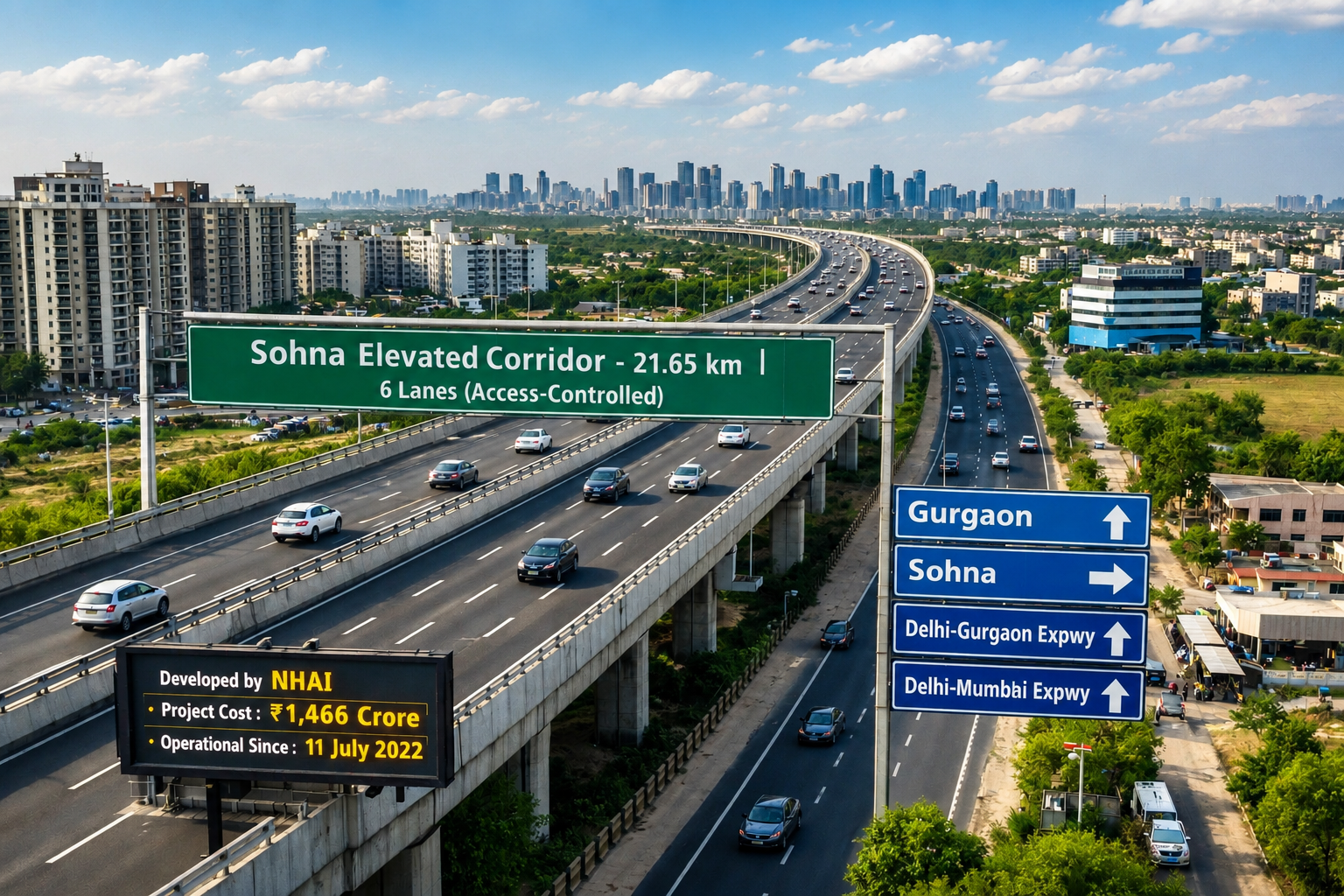
Is Sohna Really the Next Chhatarpur?
Three decades after Chhatarpur redrew South Delhi's map for space, privacy and exclusivity, a familiar pattern is now taking shape further south, and Sohna is where the smart money is beginning to look.
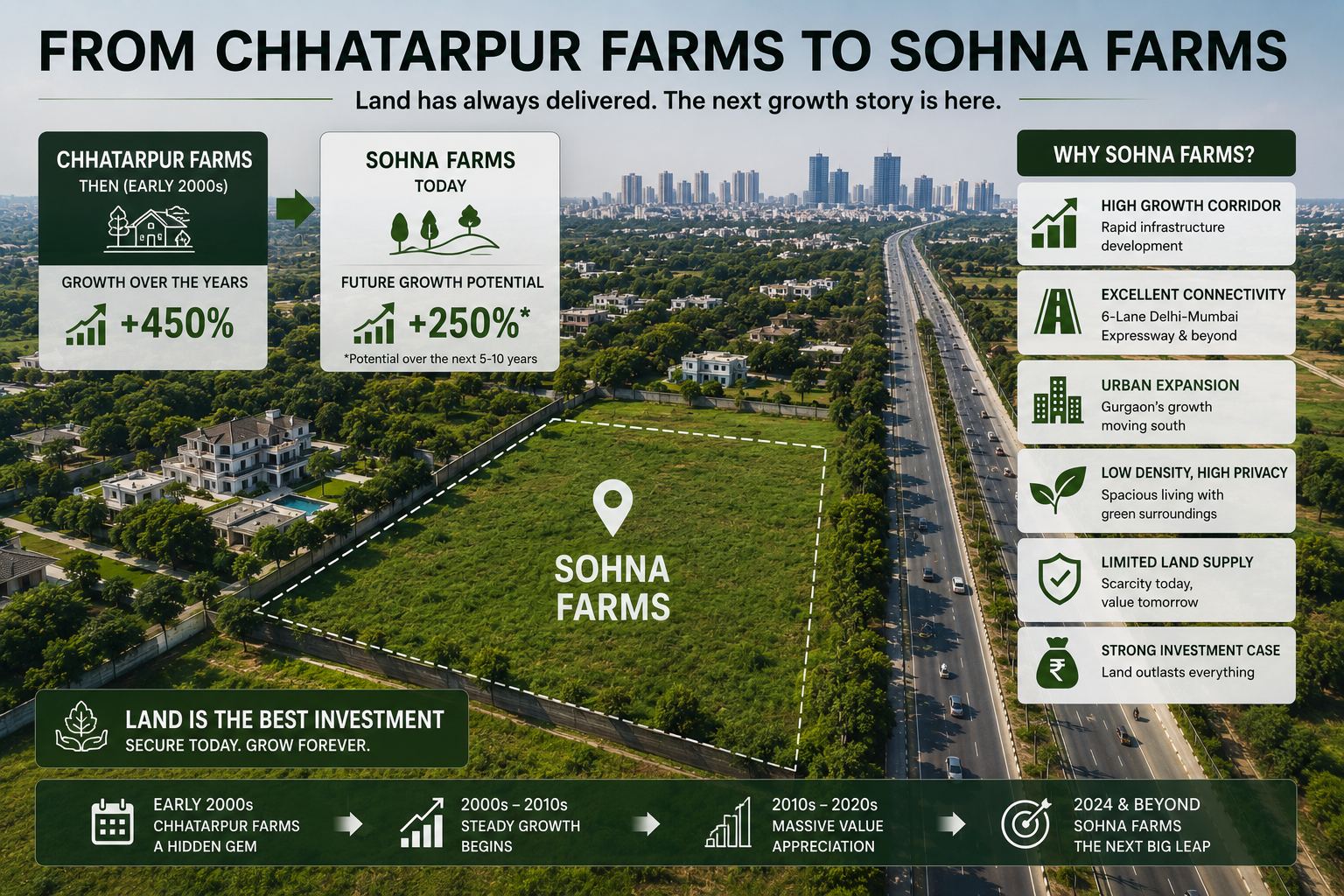
How Chhatarpur Farmhouses Created Multi-Crore Wealth for Early Buyers
What a quiet corner of South Delhi can teach investors about land, scarcity, and long-term wealth creation.

The ₹5 Crore Land Purchase That Became Worth ₹70 Crore
What the Story of DLF Chhatarpur Farms Reveals About Wealth Creation Through Premium Land Ownership
One short email. Stories you can use.
A free, occasional email from our editorial team with our latest features, explainers and reads. Unsubscribe any time — your email stays with us.