The Rhine-Vistula Axis: How European Retailers Are Redrawing Cross-Border Fulfilment
Faced with escalating road tolls and the collapse of urban micro-hub economics, continental merchants are consolidating inventory along a heavily automated central corridor.

At a sprawling logistics park outside Poznań, articulated lorries bearing registration plates from Germany, Lithuania, and the Netherlands queue in disciplined rows before automated sorting bays. The terminal, handling merchandise for merchants trading across central Europe, epitomises a profound quiet realignment in continental supply chains. Rather than dispersing stock across dozens of satellite facilities near western European metropolitan centres, retail operators are anchoring their inventory networks along the arterial freight spine running between western Poland and the German Rhineland.
This shift marks the definitive end of the post-pandemic dispersion strategy. For nearly three years, e-commerce groups pursued decentralised warehousing, betting that proximity to the end consumer would justify the duplication of holding costs and warehouse overheads. That model has buckled under the weight of higher commercial borrowing costs, double-digit wage settlements in western distribution centres, and the sharp repricing of continental freight. The exuberant instant-delivery infrastructure championed by the likes of Gorillas has largely vanished into insolvency or distressed absorption, leaving survivors such as Flink to operate within strictly circumscribed municipal boundaries.
Poland's ascension as the continental storehouse
The primary beneficiary of this consolidation has been western Poland, which now functions as the primary distribution engine for consumer demand stretching from Scandinavia to the Po Valley. Warsaw-listed marketplace Allegro has leveraged this geography to anchor its cross-border ambitions into the Czech Republic and Slovakia, while Berlin-based Zalando has long channelled a substantial portion of its regional throughput through massive fulfilment centres positioned just east of the German frontier. By stocking high-velocity apparel and electronics within a few hours' transit of Berlin, Prague, and Vienna, merchants achieve operational economies of scale that localised national depots could never replicate.
Further west, domestic champions are engaged in parallel consolidations. In the Low Countries, Bol has integrated automated racking systems to protect operating margins within the tightly clustered Dutch and Flemish consumer zones. In France, Cdiscount has increasingly pivoted toward monetising its existing logistics real estate by offering third-party fulfilment to external sellers, mirroring a defensive playbook that prioritises asset utilisation over network expansion. Even traditional food retailers are rationalising their physical supply chains; Carrefour and REWE have largely curbed speculative investment in dedicated rapid-delivery dark stores, choosing instead to modernise automated regional distribution centres that serve physical supermarkets and click-and-collect points concurrently.
The single market functions smoothly on paper, yet European parcel logistics remains a fragmented patchwork of legacy postal surcharges, divergent road levies, and incompatible regional depot standards.
The structural reckoning in reverse logistics
Underpinning these network revisions is the relentless drain of reverse logistics, an operational burden uniquely acute in Europe. In markets such as Germany, where open-invoice purchasing historically encouraged customers to order multiple sizes and colours without immediate payment, return rates in fashion categories routinely hover near fifty per cent. Concurrently, the staggering volume of peer-to-peer parcel traffic generated by platforms like Vinted has flooded domestic couriers with low-yield, cross-border consignments, straining handling capacities from Madrid to Milan.
Processing these inward flows requires vast floorplates and substantial labour pools that western European industrial zones can no longer supply at viable margins. Consequently, returns processing is gravitating toward specialised sorting centres in central Europe, where returns are inspected, refurbished, and re-inducted into inventory without ever entering the domestic delivery networks of Paris or Frankfurt. By treating the continent as an integrated circulatory system rather than an archipelago of national markets, operators are clawing back fractional margins.
Yet this centralised architecture faces fresh structural headwinds. Germany's steep increase in heavy goods vehicle road tolls, linked directly to carbon dioxide emissions, has raised the cost of trunk-haul transport across the European transit corridor. As diesel surcharges and mandatory zero-emission fleet transition deadlines bite, the economic advantage of warehousing goods in lower-cost eastern regions will increasingly hinge on high-efficiency rail-freight linkages and flawless customs-free transit across the Schengen zone. European commerce has abandoned the illusion of frictionless infinite local availability; in its place stands a disciplined, defensive logistics machine built purely for capital preservation.
News Legacy maintains editorial independence. Some recommendations may contain affiliate links. We earn from qualifying purchases at no additional cost to you. Read our policy.
Read Next
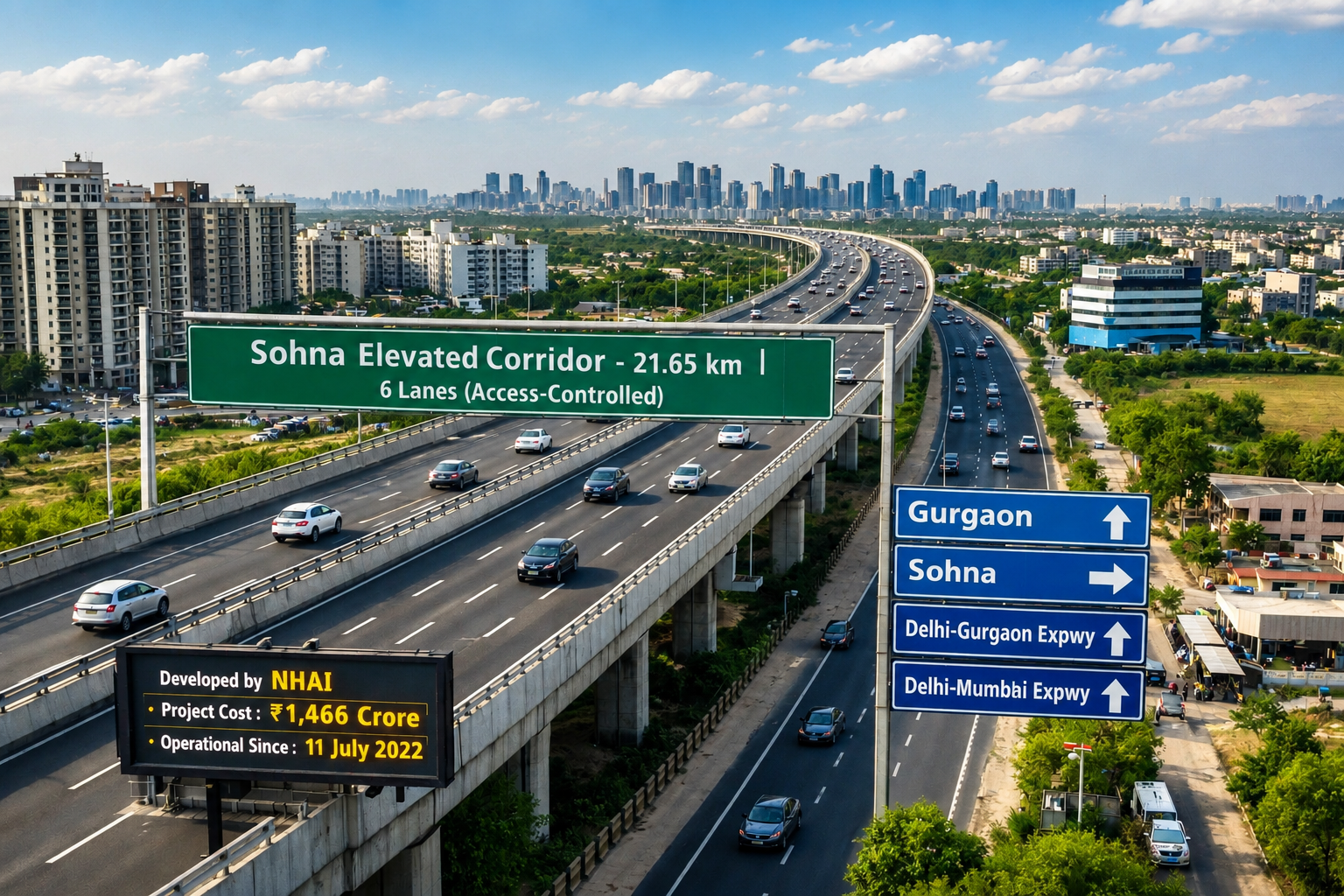
Is Sohna Really the Next Chhatarpur?
Three decades after Chhatarpur redrew South Delhi's map for space, privacy and exclusivity, a familiar pattern is now taking shape further south, and Sohna is where the smart money is beginning to look.
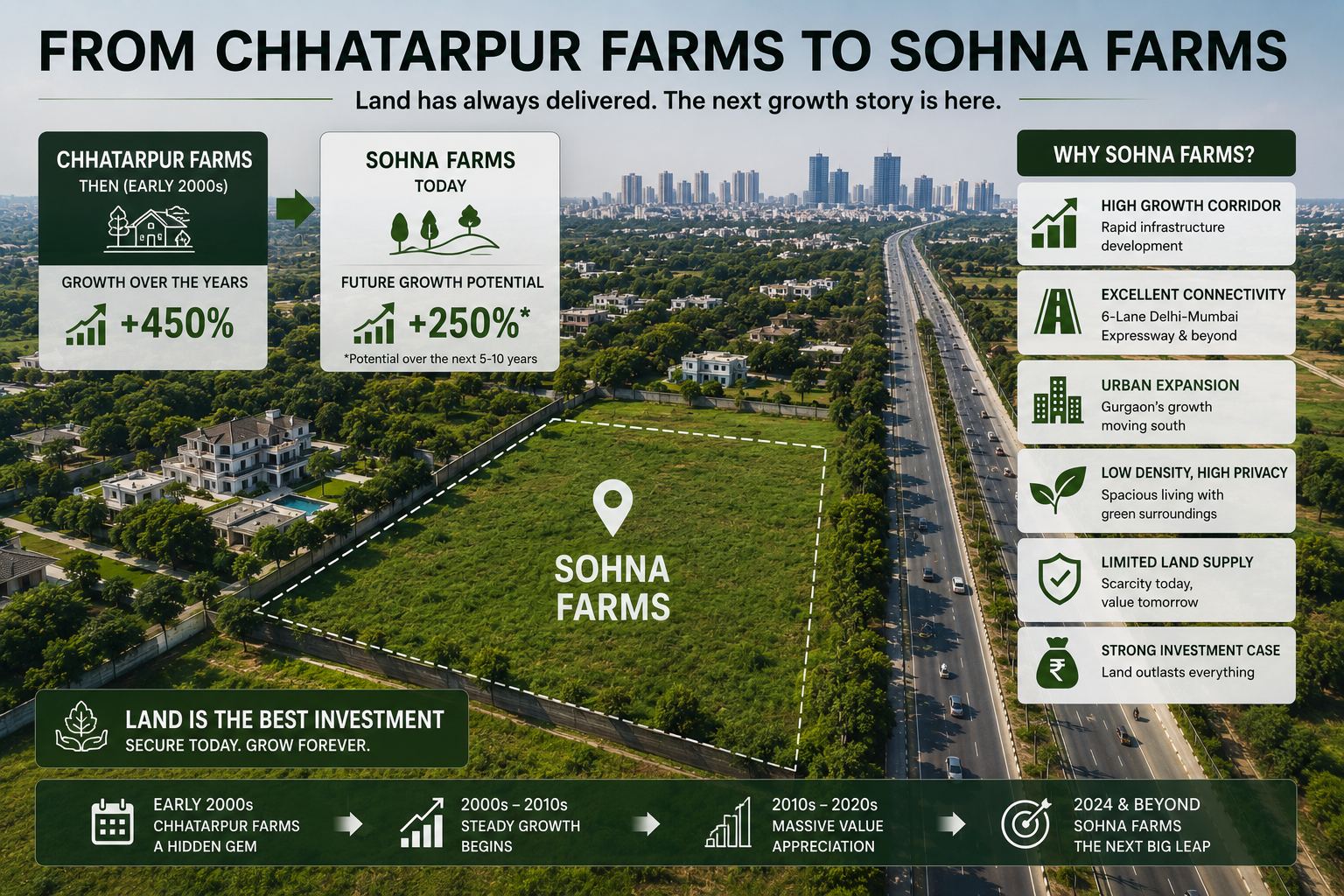
How Chhatarpur Farmhouses Created Multi-Crore Wealth for Early Buyers
What a quiet corner of South Delhi can teach investors about land, scarcity, and long-term wealth creation.

The ₹5 Crore Land Purchase That Became Worth ₹70 Crore
What the Story of DLF Chhatarpur Farms Reveals About Wealth Creation Through Premium Land Ownership
One short email. Stories you can use.
A free, occasional email from our editorial team with our latest features, explainers and reads. Unsubscribe any time — your email stays with us.