The Silent Engine of European Retail: Platforms and Personalisation Beyond National Borders
European retailers are navigating a complex digital landscape, where the tools underpinning their online presence increasingly dictate market share. As cross-border commerce accelerates, the strategic importance of robust SaaS platforms and tailored consumer experiences grows.

At a warehouse near Poznań, Allegro.pl processes thousands of parcels daily, its logistical operations seamlessly integrated with a sophisticated suite of proprietary and third-party software. This level of operational orchestration, crucial for a platform facilitating transactions across multiple categories and growing its international footprint, exemplifies a broader trend. Across the European Union, the digital infrastructure supporting retail — from inventory management to personalised marketing — has become a decisive factor in market competitiveness, especially as consumers increasingly expect a harmonised online experience regardless of national borders.
The pandemic-induced acceleration of e-commerce adoption cemented the necessity for robust digital tools among retailers, from grocery giants like Carrefour and REWE to fashion platforms such as Zalando and Vinted. Historically, many European retailers developed in-house solutions or relied on localised vendors. However, the demands of scalability, cross-border compliance, and the relentless pace of technological innovation are pushing them towards more flexible, cloud-based SaaS solutions. These platforms often offer capabilities that would be prohibitively expensive to build from scratch.
A significant shift is occurring in how these tools are deployed. Instead of purely national strategies, large retailers and marketplaces are adopting platforms that facilitate operations across several member states. Bol.com, with its strong presence in the Netherlands and Belgium, and Cdiscount in France, are examples of platforms that understand the nuanced requirements of their core markets while eyeing broader expansion. This often involves integrating payment gateways, logistics providers, and even product information management (PIM) systems that can handle multiple languages and currencies.
The Unseen Infrastructure of Customer Engagement
Personalisation, once a niche offering, is now a fundamental expectation for online shoppers. The algorithms that recommend products on Zalando, the dynamic pricing engines that adjust offers on Allegro, or the targeted promotions from Lidl's digital channels all rely on sophisticated data analytics and marketing automation platforms. These tools collect vast quantities of consumer data, analyse purchasing patterns, and predict future demand. The challenge for European retailers lies not just in deploying these systems, but in doing so while adhering to stringent data protection regulations like GDPR, a complexity often underestimated by non-European platform providers.
The growth of resale platforms such as Vinted, which connects buyers and sellers across a dozen European countries, underscores the demand for user-friendly interfaces backed by powerful, adaptable SaaS. Their success hinges on seamless cross-border shipping, secure payment processing, and intuitive user experiences – all managed by sophisticated back-end systems that can handle varying tax laws and consumer protection regulations from Spain to the Nordics. The ability of a SaaS provider to offer these localised compliances out-of-the-box significantly reduces the operational burden on the retailer.
The agility to adapt to diverse market demands and regulatory frameworks across the continent is no longer a strategic advantage; it is a prerequisite for survival in the digital retail space.
The consolidation in the rapid grocery delivery sector, exemplified by the absorption of former players like Gorillas, further highlights the critical role of technology. These businesses, which operated on razor-thin margins, depended entirely on hyper-efficient order-to-delivery software, real-time inventory management, and precise route optimisation. While the business model itself proved challenging for many, the underlying technology stack demonstrated the power of SaaS in executing complex logistical operations at speed and scale across urban European centres.
Localisation as a Core Competency
For global SaaS providers seeking to penetrate the European market, or for European companies expanding across the continent, localisation extends beyond simple language translation. It involves understanding specific payment preferences — whether it's Bancontact in Belgium, iDEAL in the Netherlands, or Blik in Poland — and integrating with popular local shipping carriers. Platforms that excel in this area gain a significant competitive edge, allowing retailers to focus on their core business rather than piecing together disparate solutions.
The investment in these digital tools is substantial. While specific figures are often proprietary, market analysts indicate that European retailers are dedicating an increasing proportion of their IT budgets to cloud-based commerce platforms, supply chain management software, and customer relationship management (CRM) systems. This ongoing shift signifies a strategic recognition that the battle for the European consumer is increasingly fought, and won, through the efficacy and adaptability of the digital tools underpinning retail operations.
News Legacy maintains editorial independence. Some recommendations may contain affiliate links. We earn from qualifying purchases at no additional cost to you. Read our policy.
Read Next

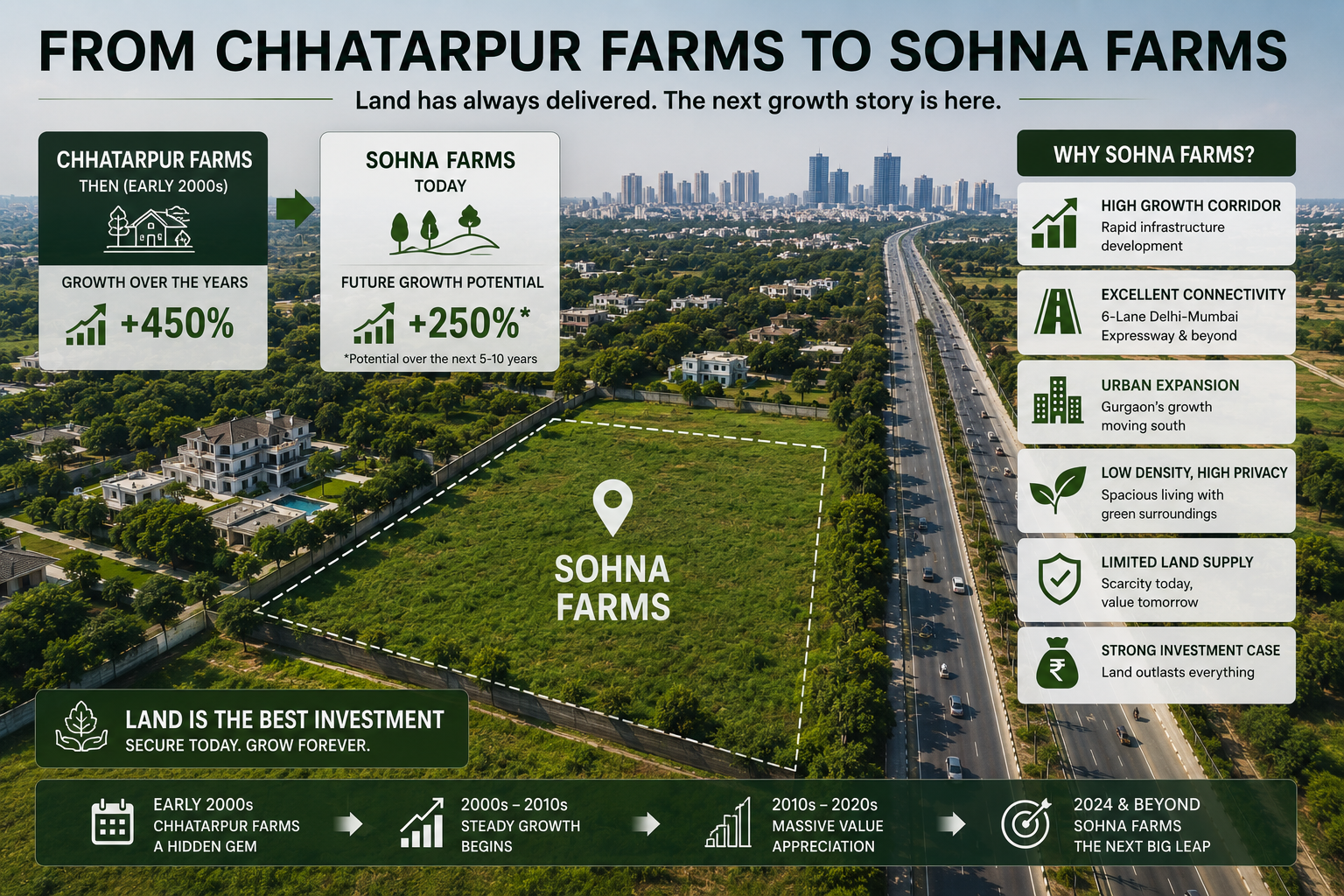
Is Sohna Really the Next Chhatarpur?
Three decades after Chhatarpur redrew South Delhi's map for space, privacy and exclusivity, a familiar pattern is now taking shape further south, and Sohna is where the smart money is beginning to look.
How Chhatarpur Farmhouses Created Multi-Crore Wealth for Early Buyers
What a quiet corner of South Delhi can teach investors about land, scarcity, and long-term wealth creation.

The ₹5 Crore Land Purchase That Became Worth ₹70 Crore
What the Story of DLF Chhatarpur Farms Reveals About Wealth Creation Through Premium Land Ownership
One short email. Stories you can use.
A free, occasional email from our editorial team with our latest features, explainers and reads. Unsubscribe any time — your email stays with us.