The Split Basket: How British Shoppers Abandoned the Middle Tier
Faced with persistent household overheads, consumers across Britain are pairing budget staples with targeted domestic luxuries, leaving traditional mid-market retail exposed.

Inside a Marks & Spencer Foodhall on a Friday evening, baskets tell an increasingly contradictory tale. Alongside value-tier own-brand pasta and discounted vegetable punnets sit twelve-pound dine-in meal selections and high-margin prepared desserts. The British weekly shop, once an orderly and predictable single-destination excursion, has fractured. As cumulative price rises across energy, mortgage renewals, and food intake settle into permanent household arithmetic, consumers are not simply trading down; they are orchestrating a deliberate compromise between austere frugality and micro-indulgences.
The structural shift has penalised retailers caught without a distinct proposition at either pole. Tesco and J Sainsbury have defended transaction volumes primarily by expanding their proprietary member pricing—Clubcard and Nectar tiers—effectively conditioning competitive shelf prices on data surrender. Yet beneath these headline retention figures lies a persistent migration of volume towards German discounters for ambient staples, matched by an unexpected resilience in premium chilled food. Marks & Spencer has delivered steady volume gains in groceries by marketing dining at home as a direct substitute for casual hospitality, exploiting the widening cost chasm between a supermarket checkout and a restaurant table.
The Economics of In-Home Substitutions
This appetite for domestic comfort without kitchen labour has simultaneously altered the unit economics of British food couriers. Deliveroo and Just Eat, once perceived primarily as weekend takeaway conduits for young metropolitan renters, now derive significant transaction value from mid-week grocery runs and branded supermarket partnerships. Rapid delivery has graduated from an emergency extravagance into an accepted structural cost for time-poor professionals who prefer paying a premium fee over enduring planned multi-stop procurement.
British consumers have not ceased spending; they have merely concentrated their residual discretionary income into defensive domestic luxuries.
The parallel in apparel is starker still. Next has fortified its operating margins through its Total Platform infrastructure and an unglamorous focus on durable family wardrobes, posting resilient full-price sales even as broader high-street sentiment softens. Conversely, pure-play online operators such as ASOS have spent the past eighteen months unwinding inventory surpluses, penalised by elevated return rates and a younger demographic whose disposable balances were eviscerated earliest by rental inflation. When young Britons pull back, they eliminate speculative fast-fashion parcels while sustaining small-ticket culinary treats.
Margin Defence in an Era of Discriminating Spend
The divergence poses profound strategic questions for capital-intensive distribution models. Ocado, whose automated customer fulfilment centres depend heavily on massive basket sizes to amortise vehicle depreciation and robotics maintenance, has found average order values challenged by shoppers systematically editing out discretionary lines. Securing top-line momentum now requires aggressive price-matching on everyday essentials, a tactical concession that compresses gross margins across automated distribution networks that were engineered under assumptions of abundant consumer liquidity.
What emerges across the British consumer landscape is an operating environment in which customer loyalty is strictly conditional and transactional. Shoppers have refined the art of cross-retailer arbitrage: loading up on bulk dry goods where unit economics are lowest, deploying digital aggregators for targeted convenience, and reserving their discretionary margin for specific, emotionally restorative purchases. For Britain’s merchant class, the implication is unsparing. Surviving the current cycle requires either ruthlessly defending the absolute price floor, or offering an unassailable justification for the premium. Any business lingering in the undifferentiated centre faces a quiet, persistent attrition of its customer base.
News Legacy maintains editorial independence. Some recommendations may contain affiliate links. We earn from qualifying purchases at no additional cost to you. Read our policy.
Read Next

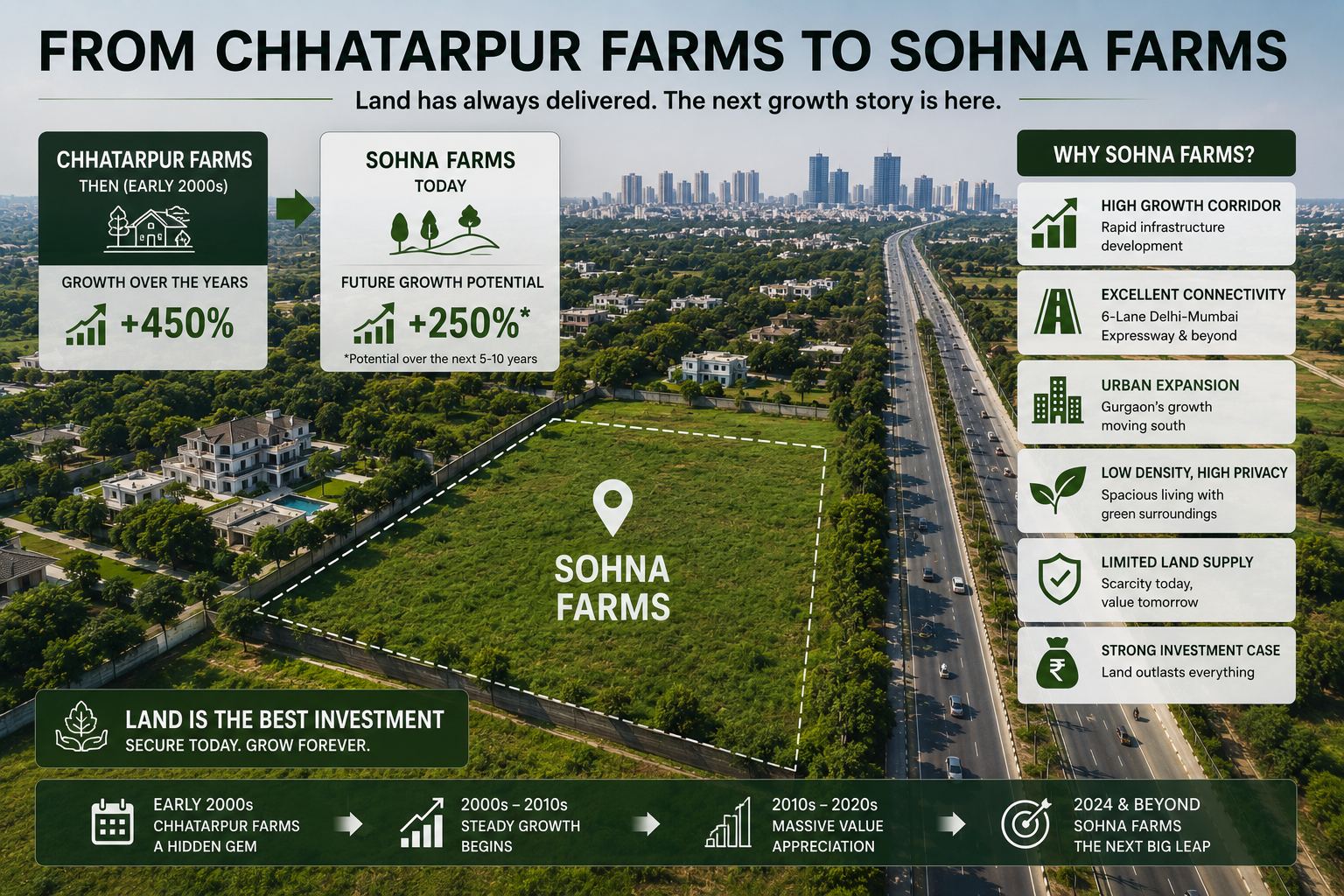
Is Sohna Really the Next Chhatarpur?
Three decades after Chhatarpur redrew South Delhi's map for space, privacy and exclusivity, a familiar pattern is now taking shape further south, and Sohna is where the smart money is beginning to look.
How Chhatarpur Farmhouses Created Multi-Crore Wealth for Early Buyers
What a quiet corner of South Delhi can teach investors about land, scarcity, and long-term wealth creation.

The ₹5 Crore Land Purchase That Became Worth ₹70 Crore
What the Story of DLF Chhatarpur Farms Reveals About Wealth Creation Through Premium Land Ownership
One short email. Stories you can use.
A free, occasional email from our editorial team with our latest features, explainers and reads. Unsubscribe any time — your email stays with us.