The Squeeze on the Referral: British Retailers Rework the Economics of the Affiliate Link
High-street stalwarts and pure-play digital merchants are curtailing payouts to voucher portals and cashback aggregators, demanding stricter proof of incremental sales.

Inside the e-commerce divisions of Britain’s largest retail enterprises, the routine monthly sign-off on affiliate network invoices has turned confrontational. For years, finance teams at merchants such as Marks & Spencer and Next accepted commission payouts to external publishers and aggregator portals as an unavoidable cost of maintaining transactional volume. Today, with domestic operating margins under sustained pressure from elevated business rates and stubborn wage settlements, those cheques are being scrutinised line by line. Retailers are no longer content to reward affiliate partners for transactions that their own brand equity would have secured unassisted.
The British affiliate market has historically been characterised by an unusually high concentration of loyalty and cashback intermediaries. Platforms such as TopCashback and Quidco became staple consumer destinations as household discretionary budgets contracted, training millions of shoppers to route purchases through a tracking portal to claim a rebate of three or four percent. For grocers like Ocado and fashion purveyors like ASOS, participating in these schemes once provided a dependable lever to juice end-of-quarter top-line figures. Yet that customer behaviour has increasingly cannibalised baseline revenues, shifting the commission from an acquisition bounty into an untargeted discount funded entirely by the retailer.
From Blanket Bounties to Basket-Level Scrutiny
In response, merchandising teams are replacing indiscriminate tracking arrangements with surgical, category-specific remuneration schedules. Apparel retailers in particular have begun excluding heavily discounted clearance items from affiliate attribution entirely, recognising that paying an intermediary six percent on a garment already marked down by forty percent yields a negative contribution margin once U.K. return rates—frequently exceeding thirty percent in fast fashion—are tallied.
Blanket commissions on transactions that consumers were already poised to make have become an unsustainable indulgence for retailers guarding thin net margins.
Delivery and quick-commerce operators have followed a parallel trajectory. Where platforms including Deliveroo and Just Eat once maintained generous customer-acquisition fees across broad affiliate networks, marketing capital has swung decisively toward ring-fenced rewards for verified first-time account registrations. Returning orders routed through third-party incentive hubs are increasingly subject to zero-rate commission caps, terminating the passive extraction of margin by affiliate sites on habitual Friday evening takeaway orders.
The Ascendance of Proprietary Retail Media
This renegotiation is accelerated by the technical and regulatory decay of legacy web attribution. Enforcement of stricter consent guidelines by the Information Commissioner’s Office, coupled with the progressive degradation of third-party tracking cookies, has degraded the reliability of traditional affiliate tracking networks. In their place, traditional retailers are developing an appetite for closed-loop environments that they control directly.
Supermarket giants such as Tesco, through its Dunnhumby data division, and Sainsbury’s, via its Nectar360 unit, have constructed walled retail-media networks that offer consumer packaged goods brands far more granular visibility than an external publisher ever could. By matching loyalty-card identities with digital touchpoints, these grocers can substantiate incremental lift with cash-register data. External affiliate networks, which typically operate on coarse click-to-sale attribution models, struggle to match the analytical rigour now standard among FTSE 100 commercial directors.
The consequence is a distinct bifurcation within British digital marketing. Passive aggregator platforms that rely on harvesting high-intent, last-click traffic are finding their commercial contracts tightened or cancelled outright. Capital is being reallocated either toward original editorial commerce partners who can demonstrably shape consumer intent at the top of the funnel, or inward, toward proprietary customer loyalty infrastructure where the retailer never yields control of the underlying margin.
News Legacy maintains editorial independence. Some recommendations may contain affiliate links. We earn from qualifying purchases at no additional cost to you. Read our policy.
Read Next

Is Sohna Really the Next Chhatarpur?
Three decades after Chhatarpur redrew South Delhi's map for space, privacy and exclusivity, a familiar pattern is now taking shape further south, and Sohna is where the smart money is beginning to look.
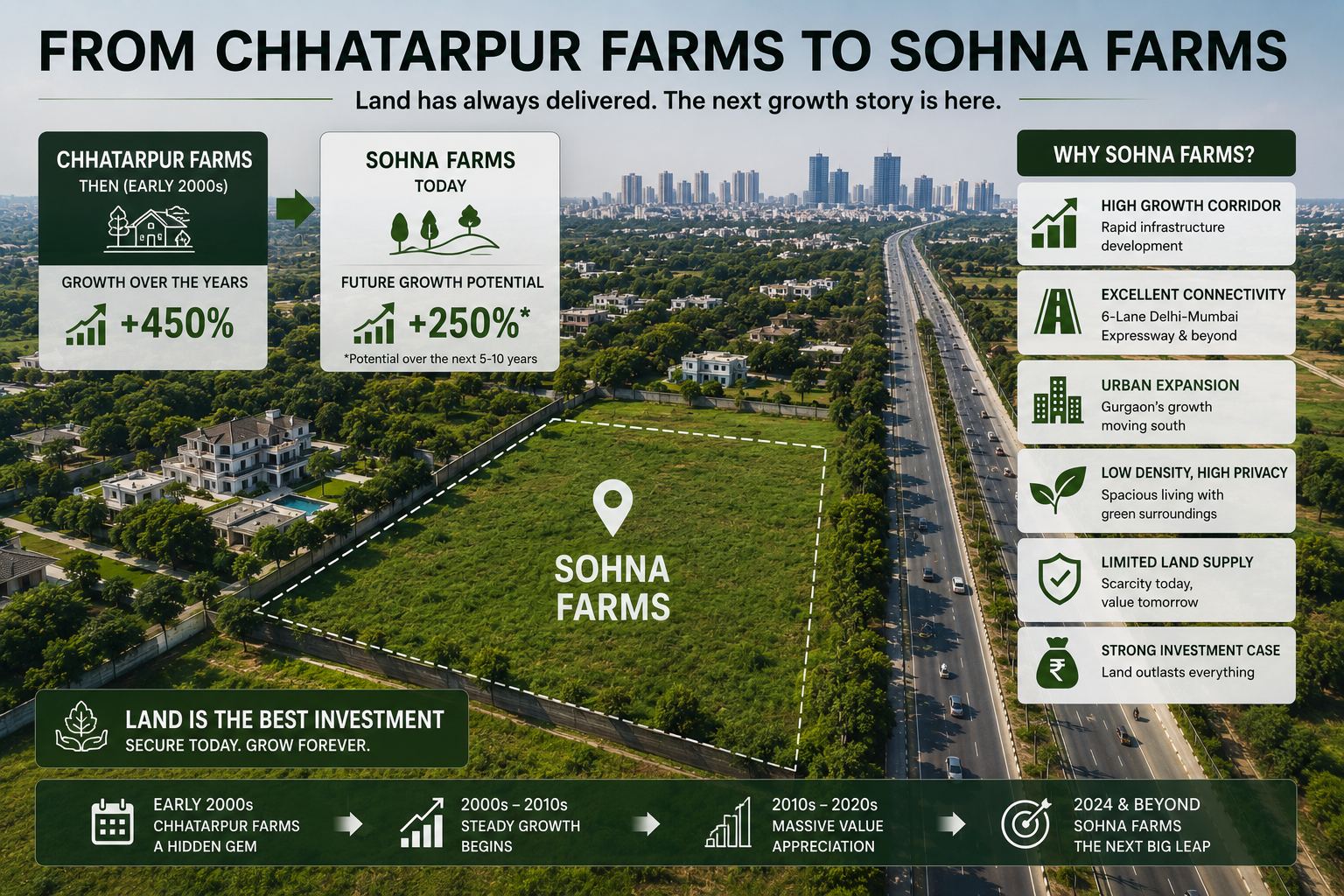
How Chhatarpur Farmhouses Created Multi-Crore Wealth for Early Buyers
What a quiet corner of South Delhi can teach investors about land, scarcity, and long-term wealth creation.

The ₹5 Crore Land Purchase That Became Worth ₹70 Crore
What the Story of DLF Chhatarpur Farms Reveals About Wealth Creation Through Premium Land Ownership
One short email. Stories you can use.
A free, occasional email from our editorial team with our latest features, explainers and reads. Unsubscribe any time — your email stays with us.