The UK's Marketplace Paradox: Retailers Recalibrate Digital Ambition Amid Economic Headwinds
British retailers are navigating a complex landscape, balancing the imperative for digital expansion with the practicalities of a tightening consumer purse and evolving operational costs. The rush to embrace online marketplaces is giving way to a more strategic, and sometimes cautious, approach.

Even as Ocado reports a marginal uptick in revenue for its UK retail joint venture, the broader narrative for British consumer-facing businesses highlights a period of significant recalibration. What was once seen as an unqualified necessity — the aggressive expansion into digital marketplaces and rapid delivery networks — is now subject to more stringent scrutiny, driven by inflationary pressures, shifting consumer habits, and the undeniable cost of sustained online presence. The immediate post-pandemic surge in digital adoption has matured into a more nuanced competitive environment.
The initial land-grab mentality that saw many traditional retailers scrambling to establish or augment their online propositions has evolved. Companies such as Tesco and Sainsbury's, having invested substantially in their online grocery delivery infrastructure, are now optimising these operations for efficiency rather than pure market share growth. This involves refining delivery slot availability, leveraging existing store networks for fulfilment, and meticulously analysing the profitability of every digital transaction.
The Cost of Convenience and Competition
The economics of rapid delivery, particularly for smaller basket sizes, continue to challenge even established players. Deliveroo and Just Eat, while deeply entrenched in the UK consumer psyche for takeaway, face persistent questions regarding profitability in the broader grocery and general merchandise sectors. Their expansion into new categories, though promising for convenience, often operates on thinner margins, necessitating high volume to achieve financial viability. The pressure to offer competitive pricing and delivery fees, against a backdrop of rising fuel and labour costs, creates a perpetual balancing act.
The strategic deployment of capital in digital channels is now less about capturing every available online customer and more about identifying profitable niches and sustainable operational models.
Fashion retailers like ASOS and Next illustrate different facets of this digital journey. ASOS, a digital-native platform, has recently grappled with significant operational restructuring and profitability challenges, reflecting the intense competition and evolving consumer preferences in online fashion. In contrast, Next, with its robust physical store presence and sophisticated online catalogue, has demonstrated a more resilient hybrid model, successfully integrating its digital offerings with its traditional retail strengths. This divergence underscores that a digital-first approach does not automatically guarantee success; operational agility and a deep understanding of the customer journey remain paramount.
Marks & Spencer, a venerable name on the British high street, continues to enhance its digital capabilities, particularly through its joint venture with Ocado. This partnership exemplifies a strategy to combine established brand trust with leading-edge e-commerce and logistics technology. The aim is to capture a larger share of the online grocery market while simultaneously modernising its general merchandise offering through improved digital interfaces and fulfilment options. Success hinges on a seamless integration that leverages both brands' strengths.
Shifting Consumer Impulses
Consumer behaviour, particularly in a climate of higher interest rates and persistent inflation, has become more discerning. Discretionary spending has tightened, leading to a greater emphasis on value and a reduction in impulse purchases. This affects not only the volume of online transactions but also the average basket size and the willingness to pay premiums for speed or novelty. Retailers are observing a trend towards larger, less frequent online orders, particularly for essentials, and a more considered approach to non-essential purchases.
The narrative for UK retailers is thus one of strategic consolidation and efficiency. While the digital imperative remains, the approach has matured beyond simply 'being online.' It now encompasses an intricate optimisation of supply chains, a forensic analysis of customer lifetime value, and an unwavering focus on sustainable operational profitability. The immediate future suggests a period where the foundational elements of digital commerce are rigorously tested and refined, rather than merely expanded.
News Legacy maintains editorial independence. Some recommendations may contain affiliate links. We earn from qualifying purchases at no additional cost to you. Read our policy.
Read Next

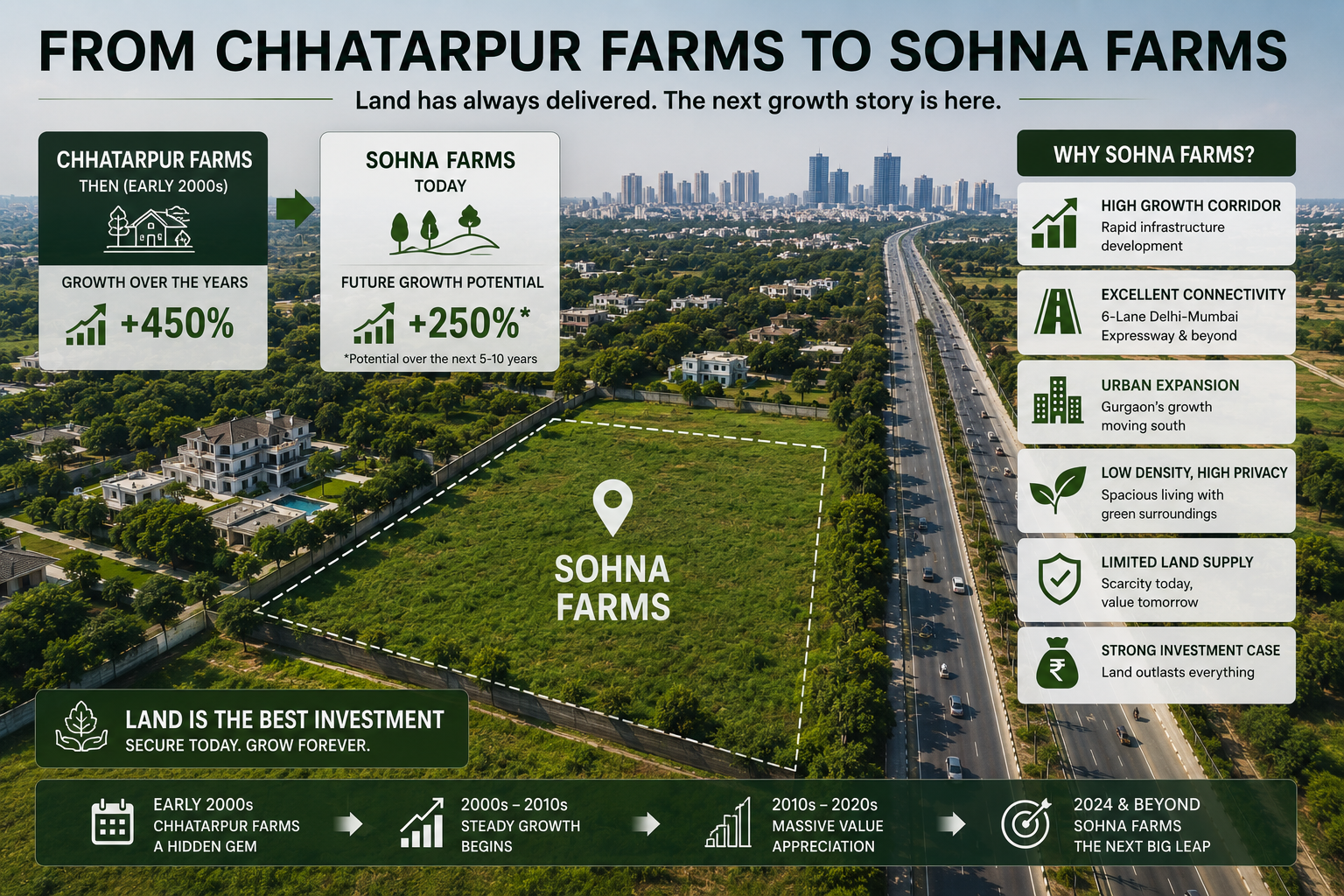
Is Sohna Really the Next Chhatarpur?
Three decades after Chhatarpur redrew South Delhi's map for space, privacy and exclusivity, a familiar pattern is now taking shape further south, and Sohna is where the smart money is beginning to look.
How Chhatarpur Farmhouses Created Multi-Crore Wealth for Early Buyers
What a quiet corner of South Delhi can teach investors about land, scarcity, and long-term wealth creation.

The ₹5 Crore Land Purchase That Became Worth ₹70 Crore
What the Story of DLF Chhatarpur Farms Reveals About Wealth Creation Through Premium Land Ownership
One short email. Stories you can use.
A free, occasional email from our editorial team with our latest features, explainers and reads. Unsubscribe any time — your email stays with us.