The UK's Rapid Grocery Delivery Exodus: A Sector's Shifting Fortunes
The once-booming rapid grocery delivery market in the UK is undergoing a significant contraction, as companies recalibrate their aggressive expansion strategies amid intensifying competition and a recalibration of investor expectations.

The distinctive teal and purple livery of Getir delivery riders, once a ubiquitous sight in London and other major UK cities, has grown notably scarcer. This shift reflects a broader trend within the rapid grocery delivery sector, where a flurry of pandemic-era investment and hyper-growth has given way to a more pragmatic and challenging environment. The initial promise of immediate gratification for everyday essentials is confronting the enduring realities of unit economics and consumer spending habits.
Companies that raised substantial capital just a few years ago, such as Getir and Gorillas (which Getir acquired in 2022), are now facing difficult strategic choices. The model, predicated on a network of 'dark stores' — small urban warehouses stocked for swift dispatch — requires high order volumes and efficient last-mile logistics to achieve profitability. Achieving this at scale across numerous, often expensive, urban locations has proven more difficult than initial projections suggested.
The Fading Allure of Instant Gratification
The consumer proposition of rapid delivery, while appealing, often comes at a premium or relies on heavy discounting to attract and retain users. As the cost of living in the UK continues to exert pressure on household budgets, discretionary spending, including on convenience-led services, is being scrutinised more closely. The habit of spontaneous, small-basket ordering, which defined the sector's early boom, appears to be less entrenched than initially anticipated, particularly when compared to planned weekly shops from established supermarkets like Tesco or Sainsbury's.
Deliveroo and Just Eat, while broader in their offering, have also experienced the challenges of the grocery segment, often partnering with existing retailers rather than building out their own inventory and dark store networks. This approach mitigates some capital expenditure but still necessitates efficient fulfilment and competitive pricing. Ocado, already an established player in online grocery, operates on a different, more capital-intensive automated warehouse model, yet even it faces scrutiny over its path to profitability for its solutions division.
The valuation corrections seen across the technology sector globally have cascaded into this segment, making further rounds of venture capital funding more difficult to secure. Investors are prioritising clear pathways to profitability over sheer growth metrics, a stark contrast to the climate of 2020-2021 when market share expansion was paramount.
Strategic Retrenchment and Consolidation
Evidence of this retrenchment is clear: Getir recently announced significant redundancies and a reduction in its operational footprint in several European markets, including a substantial scaling back in the UK. This follows similar adjustments from other players, either through market exits or severe curtailment of services. The competitive landscape is shrinking, suggesting a future with fewer, more robust operators, possibly integrating more closely with established retail infrastructure rather than operating as purely independent entities.
The shift suggests that the initial 'move fast and break things' approach, while effective in gaining early market share, was not sustainable for businesses dealing with perishable goods and complex urban logistics. The enduring success in online retail, demonstrated by firms like ASOS or Next, relies on different operational efficiencies and a customer journey less focused on immediate gratification and more on range, value, and brand loyalty.
The operational complexities of managing hyperlocal fulfilment, coupled with a more cautious consumer, are forcing a fundamental reassessment of what rapid grocery delivery can truly achieve in terms of long-term financial viability.
The trajectory of the rapid grocery sector in the UK serves as a salient case study for other startup-driven markets. It underscores the critical importance of sustainable unit economics and a deep understanding of consumer behaviour beyond the initial novelty, particularly when competing with deeply entrenched incumbents and facing fluctuating economic conditions.
News Legacy maintains editorial independence. Some recommendations may contain affiliate links. We earn from qualifying purchases at no additional cost to you. Read our policy.
Read Next

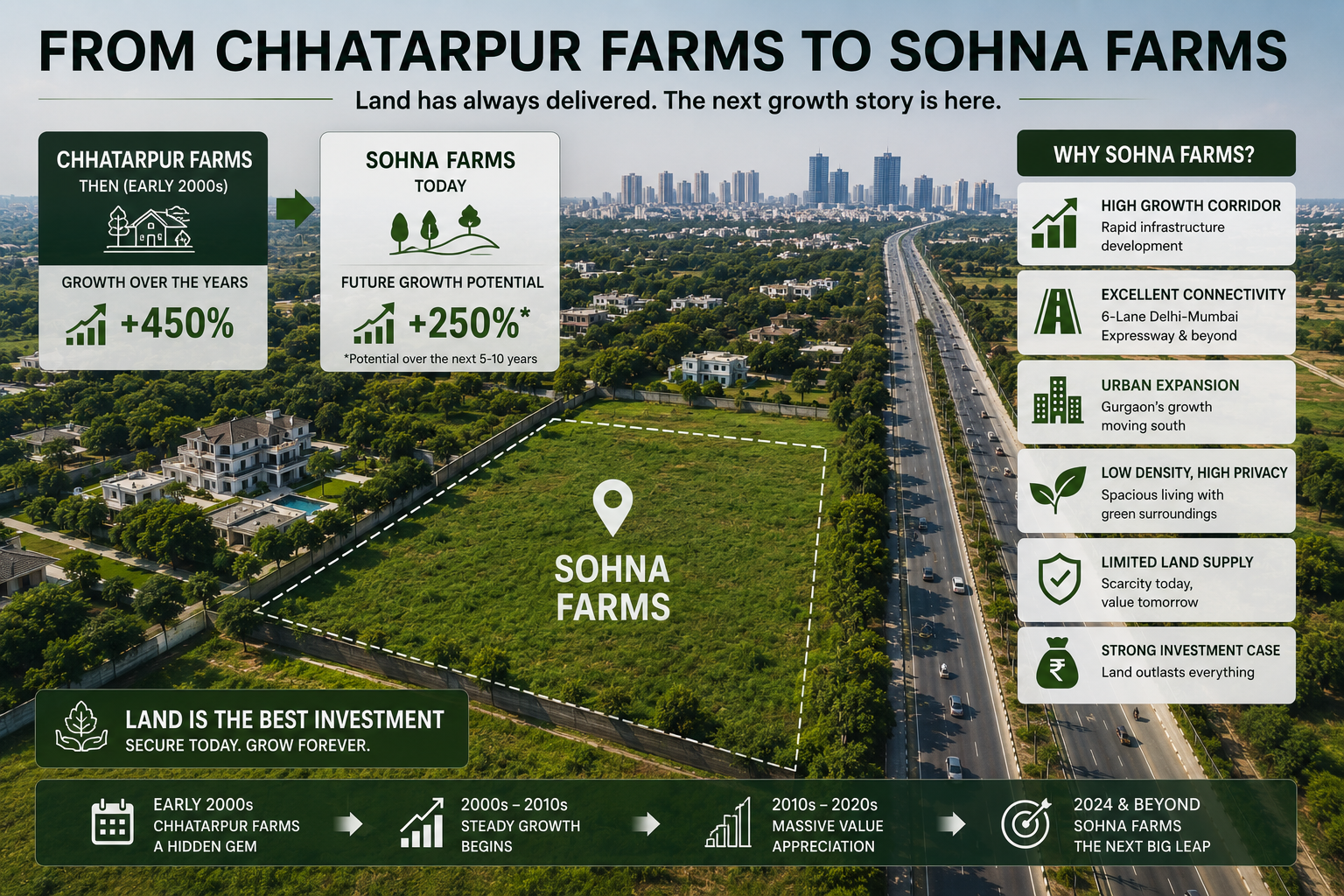
Is Sohna Really the Next Chhatarpur?
Three decades after Chhatarpur redrew South Delhi's map for space, privacy and exclusivity, a familiar pattern is now taking shape further south, and Sohna is where the smart money is beginning to look.
How Chhatarpur Farmhouses Created Multi-Crore Wealth for Early Buyers
What a quiet corner of South Delhi can teach investors about land, scarcity, and long-term wealth creation.

The ₹5 Crore Land Purchase That Became Worth ₹70 Crore
What the Story of DLF Chhatarpur Farms Reveals About Wealth Creation Through Premium Land Ownership
One short email. Stories you can use.
A free, occasional email from our editorial team with our latest features, explainers and reads. Unsubscribe any time — your email stays with us.