The UK's Retail Backbone: Navigating a New Era of Logistical Friction
British retailers are confronting a protracted period of supply chain recalibration, driven by heightened operational costs, evolving consumer expectations, and structural shifts in global trade. The efficiency of goods movement now stands as a critical determinant of market competitiveness.

At a Tesco distribution centre outside Milton Keynes, the precise orchestration of goods movement underscores the complex infrastructure supporting the UK's retail sector. Each pallet loaded and dispatched represents a challenge in balancing consumer demand against the rising expenditures of freight, warehousing, and labour. This daily operational reality reflects a wider industry imperative: to sustain a seamless flow of products from port to doorstep amidst unprecedented headwinds.
The landscape for UK logistics has become notably more intricate over the past three years. Post-Brexit customs formalities have introduced additional administrative burdens and transit times for goods entering from the European Union, affecting everything from fresh produce for Sainsbury's to fashion items for ASOS. These regulatory changes, while now largely integrated into operational planning, continue to exert a background pressure on supply chain efficiency and cost structures, often manifesting as higher import fees and delayed inventory replenishment.
Concurrently, the energy crisis has reverberated throughout the supply chain. Fuel costs for road haulage, a significant component of last-mile delivery for operators like Deliveroo and Just Eat, saw substantial increases during 2022. Although pump prices have moderated from their peaks, they remain elevated compared to pre-2021 levels. This directly impacts transport budgets, forcing retailers and logistics firms to either absorb the additional expense or pass it on to consumers, contributing to inflationary pressures.
The Scramble for Efficiency and Automation
In response to these cost escalations, many UK retailers are actively pursuing technological integration and process optimisation. Ocado's highly automated warehouses, though a significant capital investment, exemplify the push towards reducing reliance on manual labour and increasing throughput speed. Other companies, such as Next, have invested heavily in their own distribution networks, seeking to gain greater control over their inventory and delivery timelines, thereby mitigating external risks and improving customer service metrics.
The scarcity of skilled labour, particularly HGV drivers, has also become a persistent issue, further straining logistical capacities. While some immediate shortages have eased from their most acute phase in 2021, the underlying demographic challenges and the attractiveness of the profession remain concerns. This fuels continued interest in warehouse automation and drone delivery trials, although widespread deployment of the latter remains some distance off for most general merchandise.
The strategic deployment of capital into resilient and adaptable logistics networks is no longer merely a competitive advantage; it is rapidly becoming an operational necessity for enduring market presence.
Consumer expectations, largely shaped by the convenience of online retail, continue to demand rapid and flexible delivery options. The 'next-day' or even 'same-day' standard set by major online platforms requires a highly responsive and often costly logistical infrastructure. Marks & Spencer, for instance, has had to adapt its extensive store network to function increasingly as click-and-collect hubs or local dispatch points, blurring the lines between physical and digital retail logistics.
Localisation and Inventory Strategy
A notable shift is occurring in inventory management, moving away from purely 'just-in-time' models towards a more 'just-in-case' approach, albeit a lean version. Retailers are exploring strategies such as holding larger buffer stocks within the UK, and diversifying sourcing away from single points of origin to multiple regions. While this strategy carries higher warehousing costs, it aims to reduce vulnerability to geopolitical events, port disruptions, or localised manufacturing slowdowns. This re-evaluation of global supply chains contributes to higher capital requirements and operational complexity.
The cumulative effect of these factors — elevated operating costs, labour market challenges, and revised global trade dynamics — means that logistical considerations are now occupying a more central position in strategic board discussions across the UK retail sector. Companies capable of innovating within this constrained environment, either through technological adoption or shrewd operational redesign, are positioning themselves for long-term endurance in a market where efficiency can translate directly into profitability and market share.
News Legacy maintains editorial independence. Some recommendations may contain affiliate links. We earn from qualifying purchases at no additional cost to you. Read our policy.
Read Next
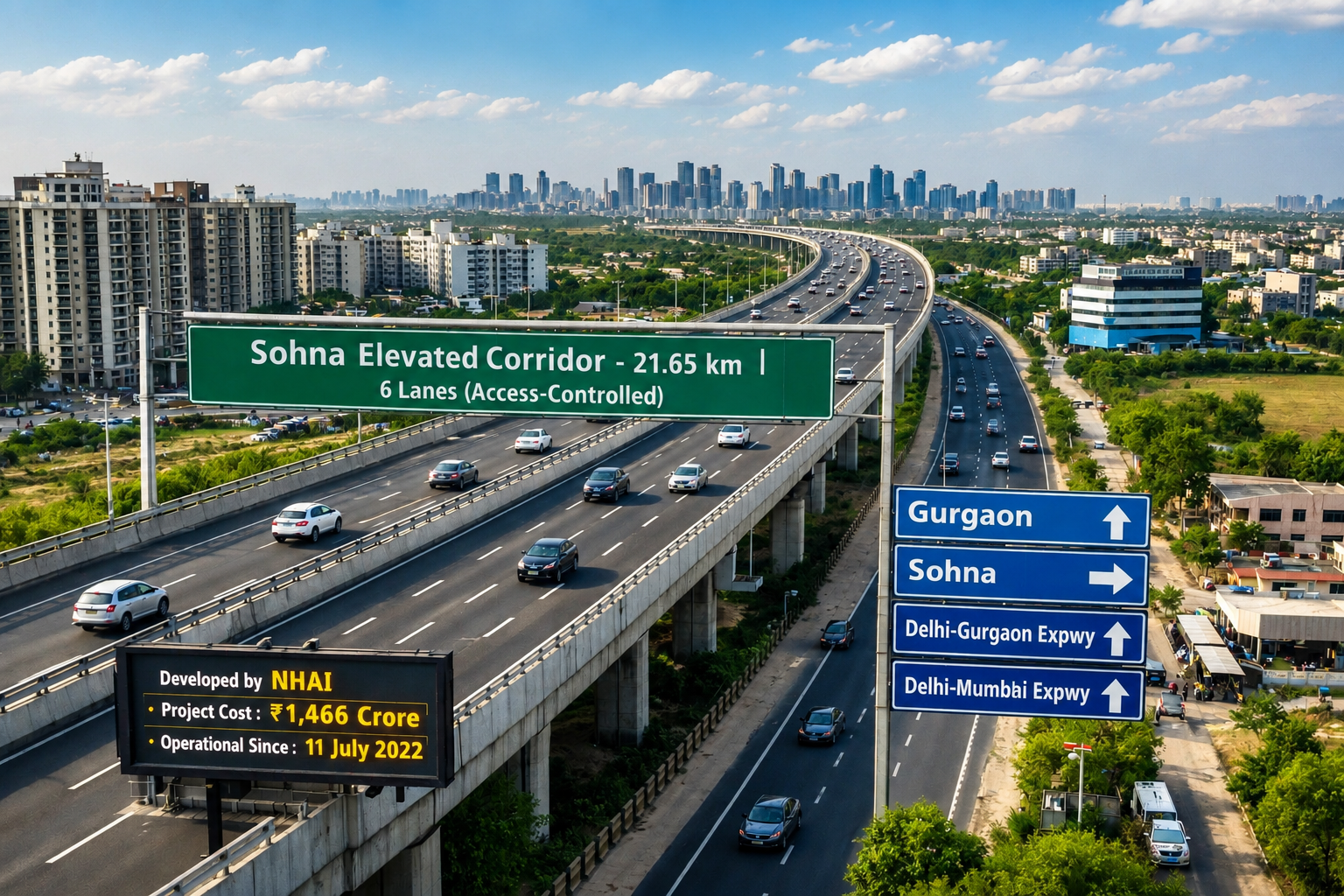
Is Sohna Really the Next Chhatarpur?
Three decades after Chhatarpur redrew South Delhi's map for space, privacy and exclusivity, a familiar pattern is now taking shape further south, and Sohna is where the smart money is beginning to look.

How Chhatarpur Farmhouses Created Multi-Crore Wealth for Early Buyers
What a quiet corner of South Delhi can teach investors about land, scarcity, and long-term wealth creation.

The ₹5 Crore Land Purchase That Became Worth ₹70 Crore
What the Story of DLF Chhatarpur Farms Reveals About Wealth Creation Through Premium Land Ownership
One short email. Stories you can use.
A free, occasional email from our editorial team with our latest features, explainers and reads. Unsubscribe any time — your email stays with us.