The UK's Retail Renaissance: Beyond the Digital Facade
As British consumers navigate persistent economic pressures, the nation's retail giants are quietly recalibrating their technology investments, moving past surface-level e-commerce enhancements to embed deeper operational efficiencies and novel customer experiences.

A recent visit to a Marks & Spencer Foodhall reveals a subtle shift: while self-checkout remains prominent, new digital screens are increasingly deployed, offering more than just price information. They display origin stories, nutritional content, and even recipe suggestions, hinting at a broader strategy to leverage in-store technology for a richer brand interaction rather than solely transactional speed. This evolution underscores a critical juncture for UK retail; the initial rush to digitise during the pandemic has given way to a more considered integration of technology, focusing on both the front and back ends of the customer journey.
The landscape for British retailers like Tesco, Sainsbury's, and Next is defined by complex forces. Inflationary pressures continue to squeeze household budgets, while labour shortages and supply chain disruptions remain persistent challenges. Against this backdrop, technology investment is no longer a luxury but a strategic imperative for margin protection and market share growth. The emphasis has shifted from simply being 'online' to leveraging data, automation, and artificial intelligence to refine operations, anticipate demand, and personalise engagement in ways previously unattainable.
Consider Ocado Group, whose sophisticated automated warehouses now power grocery deliveries for a significant portion of the nation, including its own retail venture and international partners. Their model exemplifies the scale of investment in robotics and machine learning to achieve unparalleled picking efficiency and delivery accuracy. While this capital-intensive approach may not be feasible for all, it sets a benchmark for what deep technological integration can achieve in mitigating rising operational costs.
The Data Imperative and Personalisation Paradox
The sheer volume of transactional and behavioural data generated by platforms like ASOS and Deliveroo presents both an opportunity and a challenge. Harnessing this information to predict fashion trends, optimise delivery routes, or personalise product recommendations is now table stakes. However, consumer skepticism regarding data privacy remains high, necessitating a delicate balance between leveraging insights and maintaining trust. For retailers, the successful application of AI-driven personalisation could translate into significant revenue uplifts, potentially in the single-digit percentages, by reducing return rates and increasing basket sizes.
The pursuit of technological advancement in retail is no longer about flash-in-the-pan innovations; it is about building resilient, adaptive ecosystems capable of navigating sustained economic turbulence and evolving consumer expectations.
Beyond the digital interface, physical stores are also undergoing a quiet technological transformation. Retailers are exploring technologies such as RFID for improved inventory management, smart shelving for real-time stock updates, and even augmented reality applications to enhance the in-store shopping experience. These investments are designed to blur the lines between online and offline, creating a more cohesive and efficient omnichannel presence. Next, for instance, has long integrated its online and store operations, demonstrating the commercial benefits of such a unified approach.
Automation and the Labour Market Equation
The integration of automation, from robotic process automation in back offices to automated guided vehicles in distribution centres, is increasingly seen as a mechanism to address the UK's tight labour market. While concerns about job displacement persist, many retailers frame these technologies as tools to augment human capabilities, freeing employees from repetitive tasks to focus on higher-value customer service roles. Companies like Just Eat are continually refining their delivery algorithms, not just for speed, but also to optimise driver allocation and efficiency, directly impacting their cost structures and service reliability.
The strategic deployment of retail technology in the UK is therefore not a simple pursuit of novelty, but a calculated response to a complex economic and social environment. It represents a fundamental re-evaluation of how goods are procured, marketed, sold, and delivered, with an eye towards long-term sustainability and competitive advantage in a market where every pound spent by a consumer is increasingly scrutinised.
Ultimately, the success of these technological endeavours will be measured not just by improved balance sheets, but by the tangible enhancement of the customer experience, whether it is through faster delivery, more relevant offers, or simply a more seamless interaction across all retail touchpoints.
News Legacy maintains editorial independence. Some recommendations may contain affiliate links. We earn from qualifying purchases at no additional cost to you. Read our policy.
Read Next

Is Sohna Really the Next Chhatarpur?
Three decades after Chhatarpur redrew South Delhi's map for space, privacy and exclusivity, a familiar pattern is now taking shape further south, and Sohna is where the smart money is beginning to look.
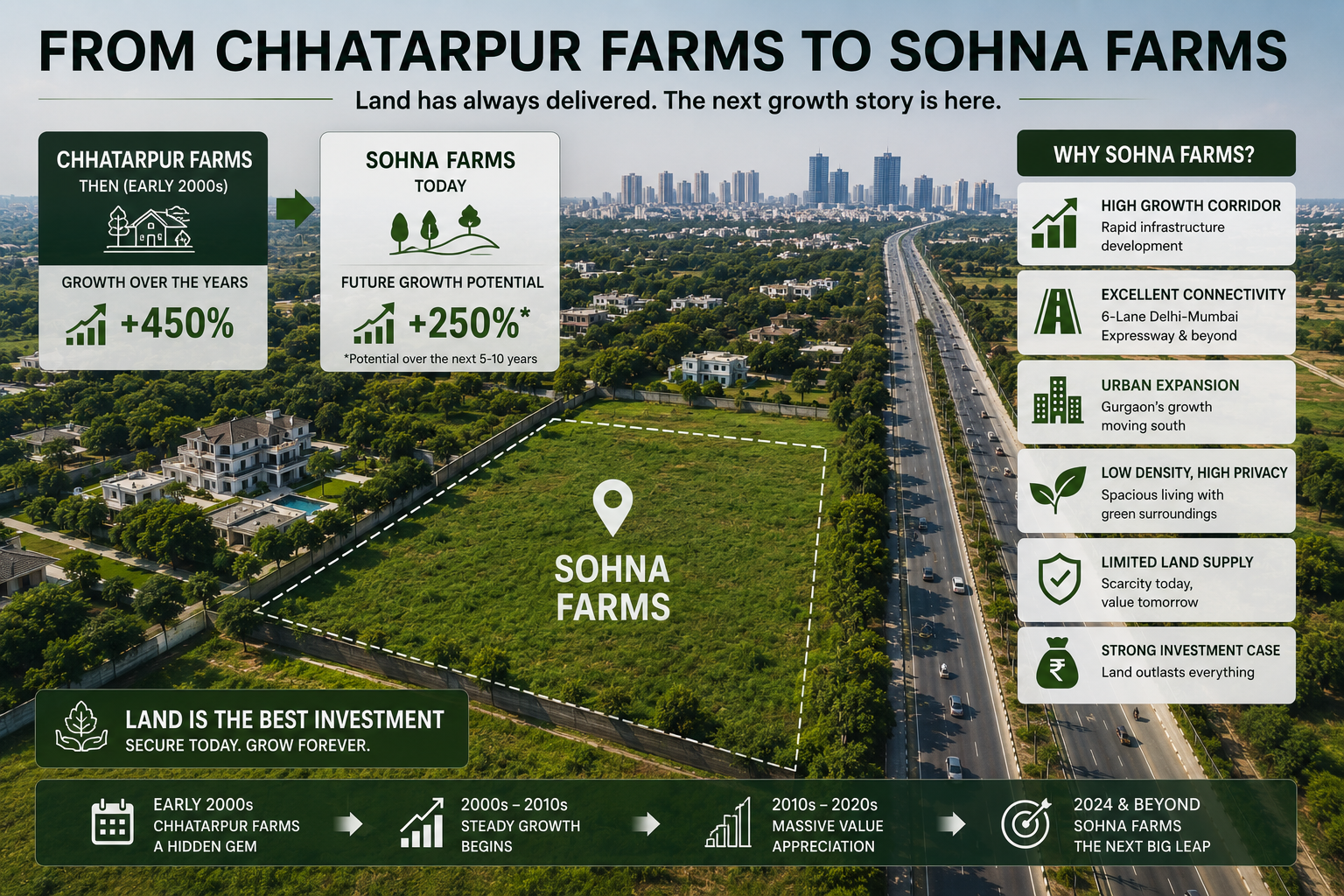
How Chhatarpur Farmhouses Created Multi-Crore Wealth for Early Buyers
What a quiet corner of South Delhi can teach investors about land, scarcity, and long-term wealth creation.

The ₹5 Crore Land Purchase That Became Worth ₹70 Crore
What the Story of DLF Chhatarpur Farms Reveals About Wealth Creation Through Premium Land Ownership
One short email. Stories you can use.
A free, occasional email from our editorial team with our latest features, explainers and reads. Unsubscribe any time — your email stays with us.