UK Retailers Navigate the Marketplace Confluence
Traditional British high street names and grocery giants are increasingly adopting or expanding marketplace models, seeking to broaden revenue streams and deepen customer engagement in a fragmented digital economy. This strategic pivot reflects a broader recalibration of retail operations amid persistent inflationary pressures and evolving consumer expectations.

The digital storefront of Marks & Spencer, once primarily a conduit for its own branded clothing and homeware, now features an expanding array of third-party labels, from Joules to Smeg. This transformation is not an isolated incident but rather indicative of a fundamental shift occurring across the British retail landscape. Established players, facing pressures from online pure-plays and rising operating costs, are strategically embracing the marketplace model as a lever for growth and resilience.
For decades, retailers focused on curating their own inventory, managing the entire supply chain from procurement to sale. The advent of sophisticated e-commerce platforms, however, has enabled a different approach: hosting goods from numerous independent sellers. This strategy allows retailers to offer a significantly wider product assortment without the capital expenditure, inventory risk, or logistical complexity associated with direct ownership.
Grocery sector behemoths like Tesco and Sainsbury's, traditionally known for their extensive in-house product lines, are also exploring this avenue. While direct grocery delivery remains their core online offering, the expansion into non-food categories through a curated marketplace allows them to compete more effectively with general merchandise retailers and diversify their revenue base beyond perishable goods. This move capitalises on their considerable existing customer traffic and trust.
Diversification as a Strategic Imperative
The economics are compelling. Marketplaces generate revenue through commissions on sales, subscription fees for sellers, or advertising placements, all without requiring the host to purchase and store the physical goods. This asset-light model contrasts sharply with the traditional retail inventory-heavy approach, offering greater agility and reduced financial exposure, particularly during periods of economic uncertainty. For instance, ASOS, an early adopter of the multi-brand model, has long leveraged a diverse supplier base to mitigate fashion trend risks, though its primary model is more multi-brand retail than a true open marketplace.
The agility offered by a well-executed marketplace strategy can prove a decisive competitive advantage in an environment demanding both breadth of choice and operational efficiency from retailers.
The British consumer has grown accustomed to vast choice and competitive pricing, largely influenced by global e-commerce giants. By integrating marketplace functionality, UK retailers can meet these expectations, potentially increasing customer loyalty by becoming a more comprehensive shopping destination. Ocado, for example, while known for its advanced fulfilment technology, has collaborated with various brands and retailers to broaden its non-food delivery options, albeit primarily through partnerships rather than an open marketplace.
However, the transition is not without its difficulties. Maintaining brand consistency and quality control across a multitude of third-party sellers requires robust vetting processes and sophisticated platform management. Integration with existing logistics infrastructure, customer service protocols, and data analytics systems also presents considerable technical and operational hurdles. Deliveroo and Just Eat, while primarily food delivery platforms, demonstrate the challenges of managing numerous independent partners while striving for a consistent customer experience.
The trajectory for many British retailers appears to be heading towards a hybrid model, where proprietary brands coexist with a curated selection of third-party marketplace offerings. This evolution aims to leverage established brand equity and customer relationships while simultaneously unlocking new revenue streams and enhancing product breadth, an essential manoeuvre in the contemporary retail landscape.
News Legacy maintains editorial independence. Some recommendations may contain affiliate links. We earn from qualifying purchases at no additional cost to you. Read our policy.
Read Next

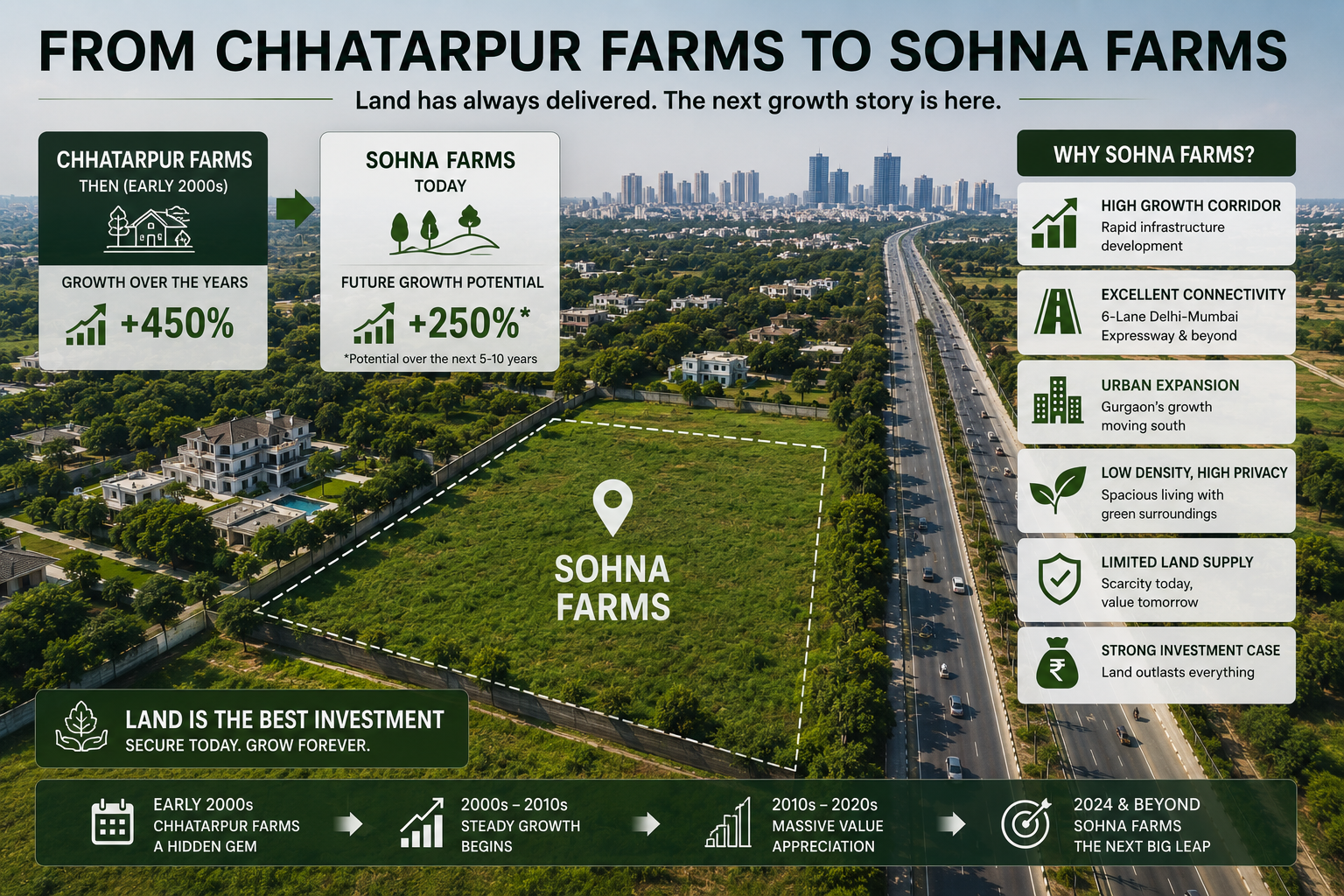
Is Sohna Really the Next Chhatarpur?
Three decades after Chhatarpur redrew South Delhi's map for space, privacy and exclusivity, a familiar pattern is now taking shape further south, and Sohna is where the smart money is beginning to look.
How Chhatarpur Farmhouses Created Multi-Crore Wealth for Early Buyers
What a quiet corner of South Delhi can teach investors about land, scarcity, and long-term wealth creation.

The ₹5 Crore Land Purchase That Became Worth ₹70 Crore
What the Story of DLF Chhatarpur Farms Reveals About Wealth Creation Through Premium Land Ownership
One short email. Stories you can use.
A free, occasional email from our editorial team with our latest features, explainers and reads. Unsubscribe any time — your email stays with us.